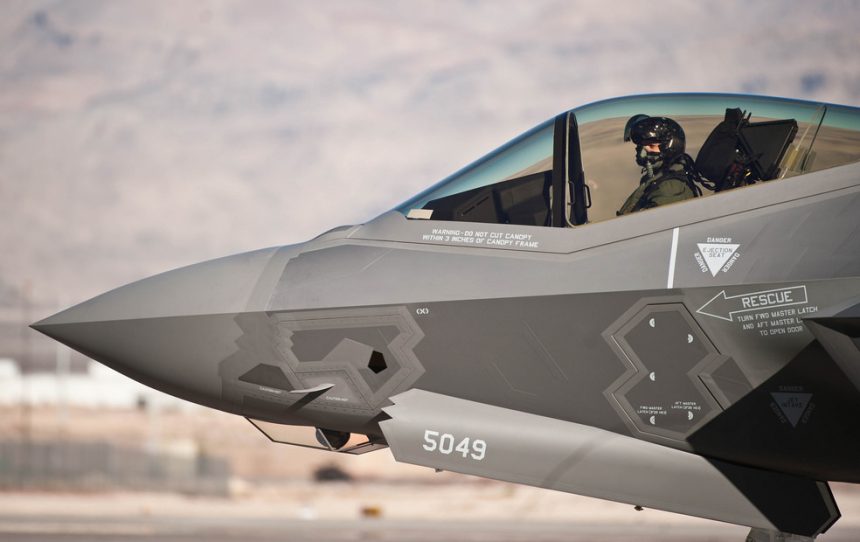
Earlier this summer, the U.S. Air Force took delivery of the first production of Lockheed Martin’s F-35 Lightning II to the 33rd Fighter Wing at Eglin AFB, Fla. The F-35 is the world’s most advanced multirole aircraft. It is the most expensive single U.S. military procurement project in history and is expected to replace a wide range of aircraft in the military’s inventory.
Designated AF-9, the newly delivered jet is a multi-role conventional takeoff and landing (CTOL) version of the futuristic fighter plane known as Joint Strike Fighter, which has been chosen by the air forces of Italy, the Netherlands, Turkey, Canada, Australia, Denmark and Norway.
Two other variants of the Joint Strike Fighter have been developed and are currently under testing: a short take off and vertical landing one, designated F-35B, and the F-35C carrier-based variant, selected for aircraft carrier operations by the U.S. Navy and the UK’s Royal Air Force. Israel will employ a customized version designated F-35I.
The F-35 Lightning II is a fifth generation fighter. It combines the high speed and agility of fast jet planes with modern technologies such as radar-evading fiber mat skins and gigabit data networking for net-centric warfare.
New breed of fighter pilots
The Joint Strike fighter aircraft is designed to improve a pilot’s situational awareness by and collecting and combining data from different onboard and offboard data sources into a single detailed view of the surrounding airspace and battlefield.
Like most modern advanced fighter planes, it contains a complex weapon system: pilots have to focus on information management, rather than worrying about “flying the aircraft.” For this reason, today’s fighter pilots are more like system administrators or information managers than the iconic Top Guns of the past.
“With previous generations fighters, flying the airplane required 80 percent of the pilot’s effort,” said one pilot of the Italian Air Force who has recently taken part to Unified Protector in Libya with the Eurofighter Typhoon, Europe’s most advanced fighter.
“With modern planes, the basic handling it’s quite simple and represents no more than 20 percent: they almost fly autonomously. On the other side, management of the huge amount of information that it provides can be overwhelming [and] is quite demanding,” this pilot told TechNewsDaily under condition of anonymity.
Lt.Col. Salvatore “Cheero” Ferrara, an Italian Air Force pilot assigned to the JSF program at Washington DC, had a slightly different take on the responsibilities of today’s pilots.
“I believe that the traits of future fighter pilots will be roughly the same as those of past pilots,” Ferrara said. “The only difference is that those skills will be used in a different way: instead of processing flight mechanics data – as I had to do with the Lockheed F-104 Starfighter – they will need to process and manage the huge amount of digital information concerning the management of both the mission and the electronic scenario.”
Easier to fly than ever before
Some years ago, under the supervision of a Lockheed Martin test pilot, I had the opportunity to fly, hover and vertically land a F-35B jet in a military flight simulator. I was surprised to discover that the controls of the so-called Cockpit Demonstrator were not as alien or difficult to navigate as I expected. There was a big panoramic touch screen that can be configured at will by tapping the screen with fingers, like a tablet or a smartphone.
Menu can be browsed using a cursor moved by a small joystick located on the engine throttle, while radar symbology is quite straightforward: the red triangles represent the enemies, the white are “unknown” aircraft and the greens are friendly ones.
All of the information is sent to the pilot’s helmet-mounted display system (HMDS), that correlates images coming from a set of cameras mounted on the jet’s outer surfaces. Consequently, as if it was equipped with x-ray vision, the pilot is able to see in all directions, through any surface, with all the information needed to fly the plane and to cue weapons, projected on the visor.
“The helmet connects the pilot to the airplane” explained Jon Beesley, former F-35 chief test pilot. “We’ve taken pieces that are essential for combat operations, such as targeting information, crucial flight measurements, and night vision capability, and merged them into the helmet to give the pilots more complete situational awareness.”
Features like the HMDS make a difficult maneuver like a vertical landing at night relatively easy. With the JSF, transition from conventional flight to the hovering, Harrier-style, is commanded by a switch. The aircraft autonomously directs the engine nozzles and reduces the speed to the predefined value.
Once in “vertical” mode, the aircraft is extremely simple to fly: if you move the stick forward or backward the aircraft climbs or descends; with the rudder, you can point the aircraft nose wherever you want.
Even a novice can fly and land an F-35 with some precision and without major problems. As in a flight simulator game.
Precautionary grounding
Although easy to fly, the F-35 remains a brand new high-tech machine that requires constant monitoring and fine tuning. On Aug. 3, the F-35 Joint Program Office issued a fleet wide precautionary suspension of flight operations as a result of an incident involving one of the test aircraft at Edwards AFB, California.
The aircraft designated AF-4 suffered an Integrated Power Package (IPP) failure during a ground maintenance engine run. The F-35’s IPP is a turbo-machine that generates power to start the engine and feed the aircraft’s cooling system, used as a back-up electrical system in case of failure of both two main generators.
These kinds of problems can occur, especially during development stages, and the determination of the root cause and the issuance of the mitigating actions are required to make the plane safer.
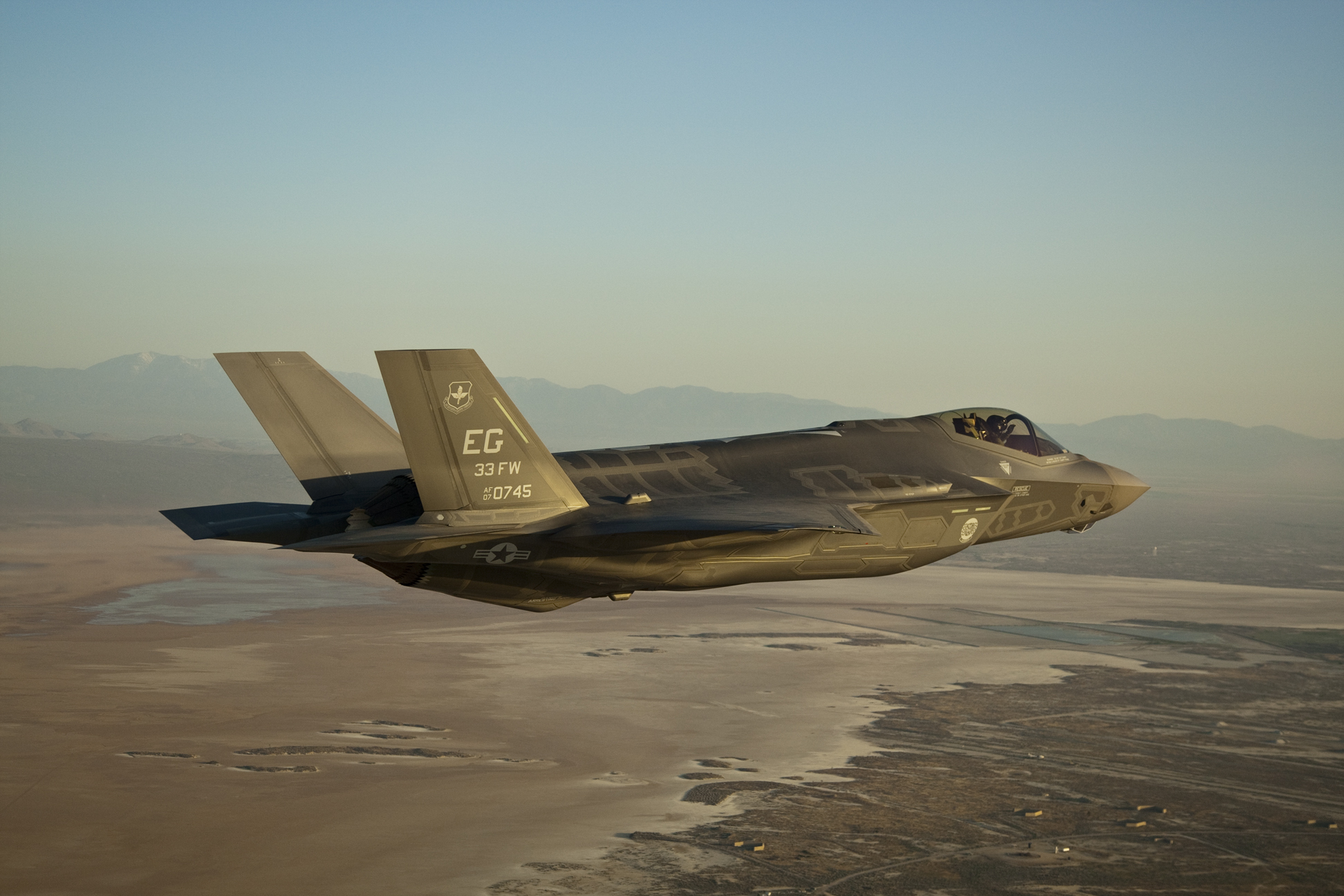

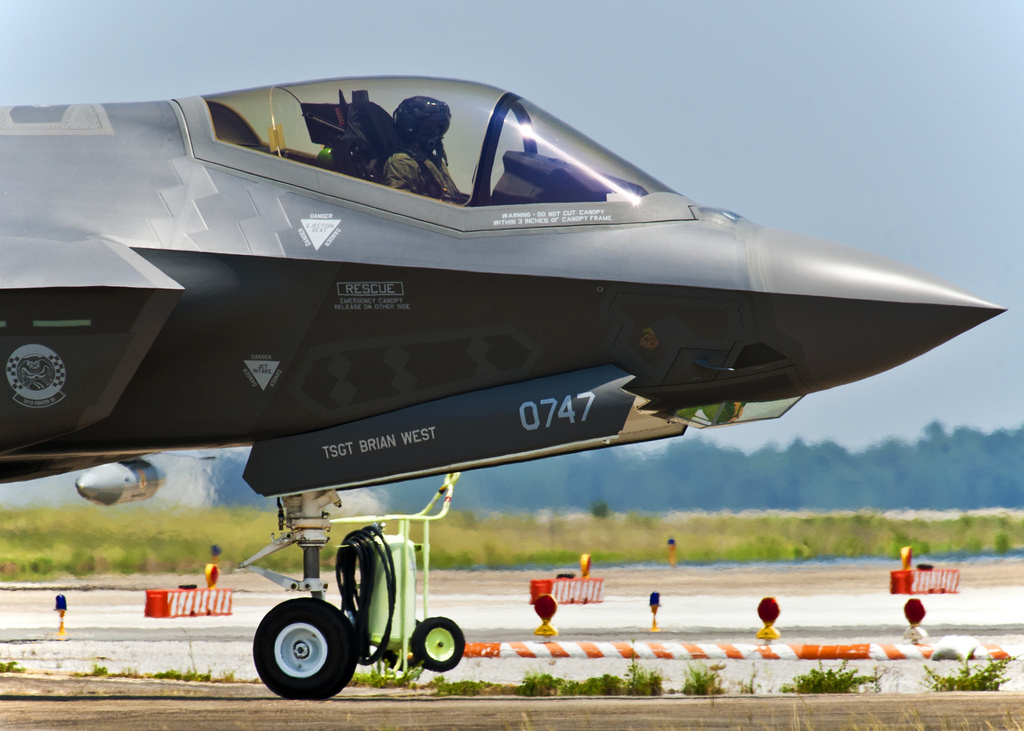

Image source: Lockheed Martin