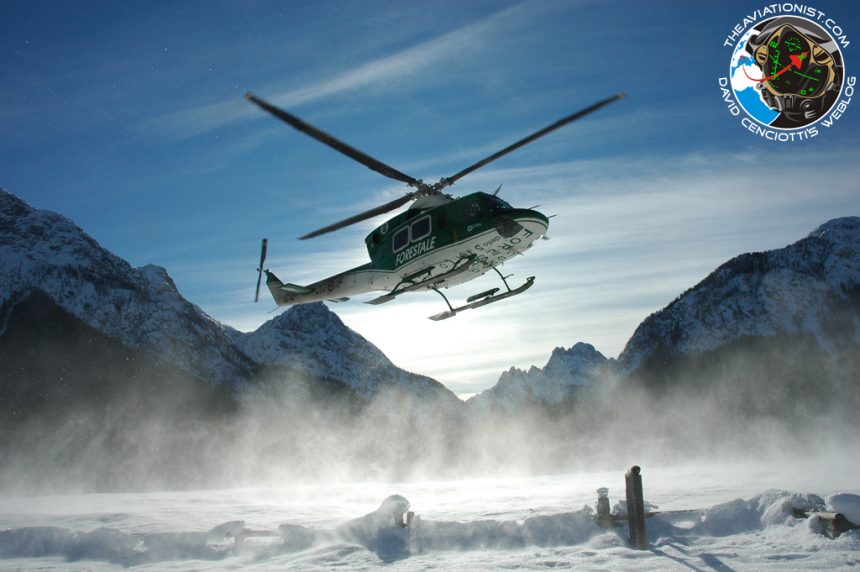
Under suspiction as the root cause of many air-deprivation events suffered by U.S. Air Force pilots flying the much troubled F-22 Raptor, hypoxia is also one of issues helicopter pilots have to face in mountain flying.
Working at high altitudes, often at maximum power, with the risk of being targeted with a deadly RPG, chopper crews are often pushed beyond their comfort zones, in attitudes and engine settings that require quick reactions and much experience.
For instance, it is for this reason that airmen destinated to operate in Afghanistan have to undertake training before being deployed.
Indeed if you thought that Afghanistan is only made of desert and sand, make a quick Google search and you’ll discover why pilots have to know how to deal with high-altitude and snow.
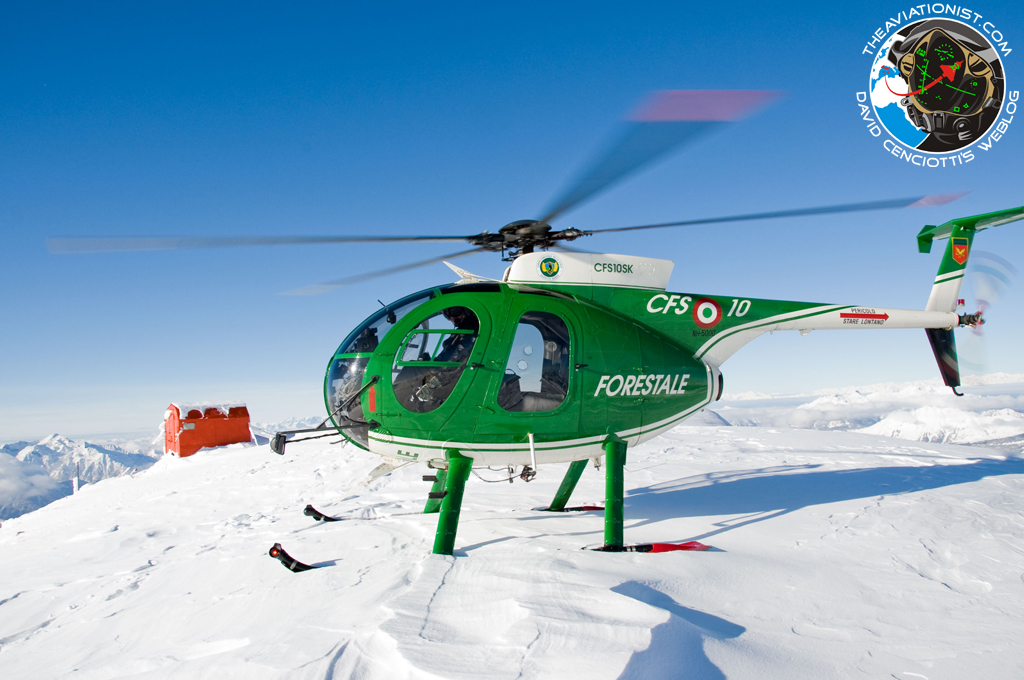
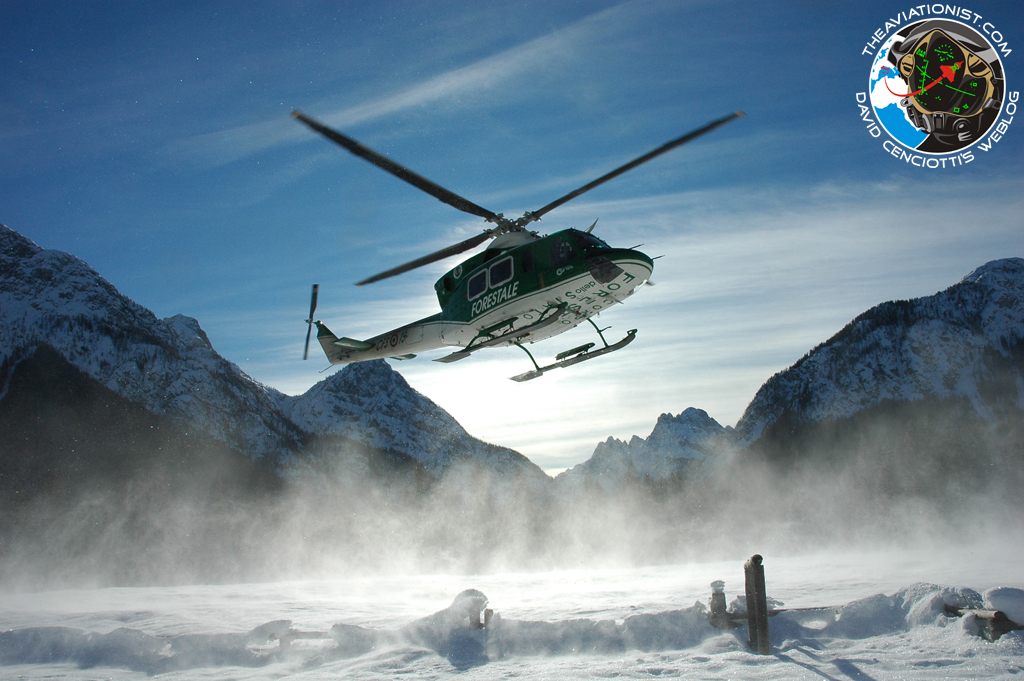
Among the Italian Armed Corps, the Corpo Forestale dello Stato (CFS, Italian for Forestry Service) acts as a police and ranger force, responsible for protecting Italy’s natural and environmental resources and eco-systems. Its duties include the prevention of environmental violations and wildfires, safeguarding animal species, ensuring antipoaching and habitat protection, and providing SAR in mountainous areas.
Although, the Service will never be deployed in combat, its pilots’ mountain flying experience is huge and analogous to those of the Air Force, Navy and Army crews who have been with their choppers in Afghanistan for years.
“Mountain flying involves difficulties and risks in every season” says Federico Dintignana, a chopper pilot of the Corpo Forestale who offen trains on snow covered mountains in northeast Italy.
“In mountain flying, it’s not always easy to perceive the helo’s attitude. For this reason, pilots tend to pull the cyclics back nearing a mountain wall, dangerously reducing the speed, and pushing it forward leaving it to enter a valley, thus increasing the airspeed to such an extent it can exceed for a few seconds the airspeed that should never be exceeded to prevent airframe damages.”
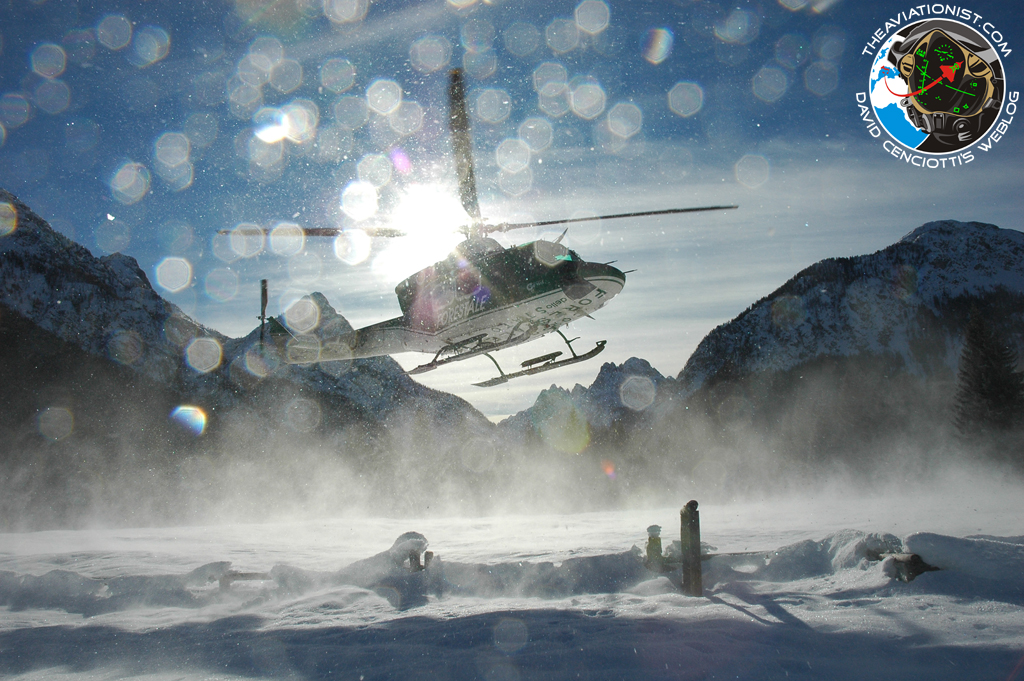
During the winter season, the presence of snow requires the pilot an extra set of evaluations, especially during takeoff, landing and while maneuvering in ground effect. The “albedo” effect (similar to the “mirror” effect during flights over the sea surface), the almost total reflection of solar radiation, forces the pilot to carefully consider not only the distance from the ground but also the ground orography.
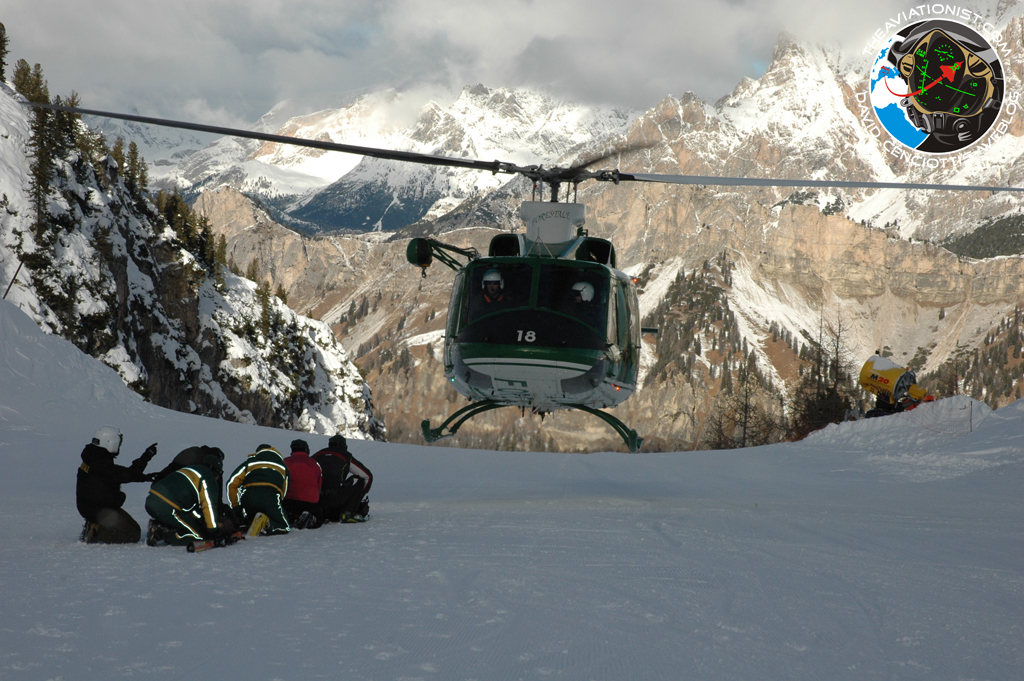
“Especially at high altitude, when the shortage of buildings and vegetation do not allow specific reference points, it is very difficult to notice the presence of slopes and assess the wind direction. For these reasons, during the final approach the pilot often asks the cooperation of the co-pilot (if present) and any crew members regarding the observation of the terrain and obstacles which may had not being noted during high and medium reconnaissance (electricity wires and cables); if it is necessary to lay skids or wheels on the ground the pilot must use the rotor flux to dust off the landing area if covered with powdery snow, but if the snow on the ground is frozen and well compacted, it will be easier to maneuver” Dintignana explains.
If the terrain does not allow to touch it with skids or wheels, or the situation makes it necessary to perform a hovering, the visibility will have to be excellent, otherwise the pilot will have to choose a different area of operation. If the pilot is disoriented by the swirl of snow during the landing phase in spite of all the previous checks, he will have to choose what to do extremely quickly.
“If very close to the ground and quite sure about the area below him, the pilot can lower the collective, otherwise he will rapidly have to set a “go around” power, ignoring everything around him and fix his attention entirely on the ADI (the Torque instrument is normally monitored by the co-pilot) in order to maintain a safe attitude and gain altitude. Climb has to be as soon and vertical as possible, until external visibility is acquired again.”




Gallery credit: Federico Dintignana