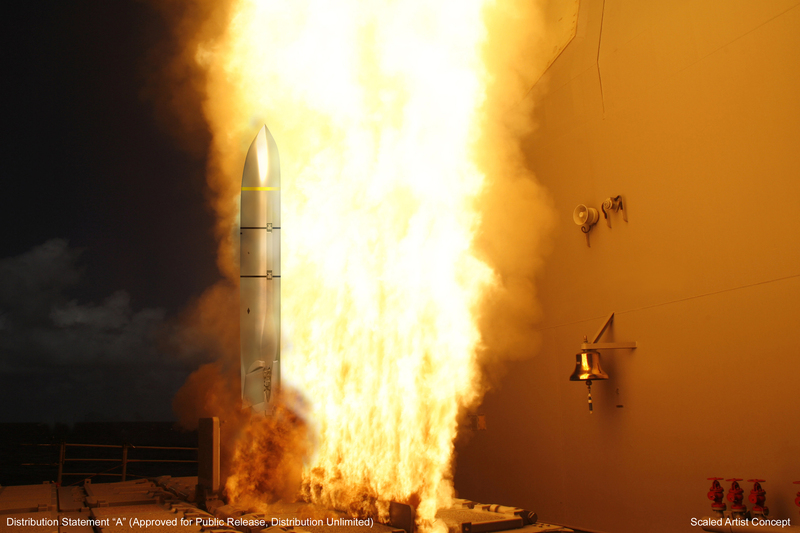
Lockheed Martin has tested the new LRASM (Long Range Anti-Ship Missile) from an Mk41 VLS (Vertical Launch System) launcher at the White Sands Missile Range, New Mexico.
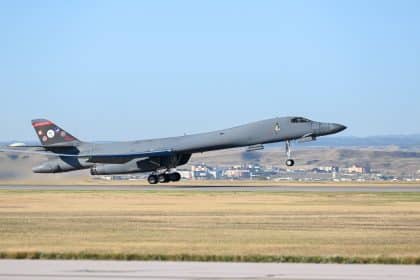
Last month the first LRASM prototype was launched by a Dyess Air Force Base’s B-1 Lancer bomber on the Point Mugu range, in California.
The LRASM was fired with a BTV (Boosted Test Vehicle), a Mk-114 rocket motor developed by Lockheed Martin alone, already used by VL/ASROC torpedoes.
Lockheed Martin’s Scott Callaway, LRASM surface launch program manager at Lockheed Martin Missiles and Fire Control, said:
“This successful flight test reduces the risk of LRASM and VLS integration, the test also validates the Mk-114 rocket motor’s capability to launch LRASM and the missile’s ability to cleanly exit the canister without damaging the missile coatings or composite structure.”
The LRASM can currently be fired from U.S. Air Force B-1s, and will be integrated on the U.S. Navy’s F/A-18 Hornets and warship’s VLS.

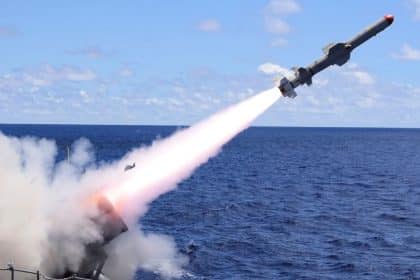
Based on the Joint Air-to-Surface Standoff Missile Extended Range (JASSM-ER), the LRASM is a stand-off weapon armed with a blast-fragmentation warhead, that can cruise autonomously, day or night, in all weather conditions. The missile features a multi-modal sensor, weapon data link and an enhanced digital anti-jam Global Positioning System to detect and destroy specific targets within a group of ships.
Jacek Siminski for TheAviationist
Image credit: Lockheed Martin
Related articles