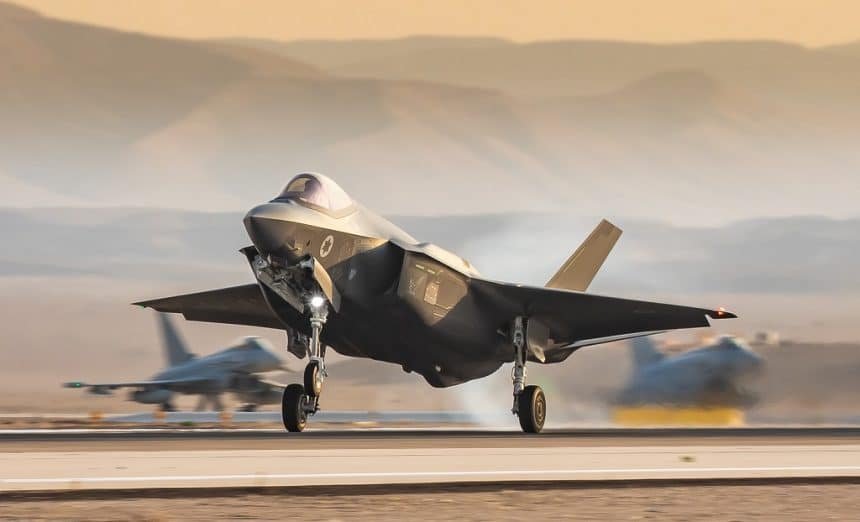
This was the first international exercise for the Adir, which trained with assets from Italy, Germany, Greece and the U.S.. Jordanian F-16s allegedly took part in the drills.
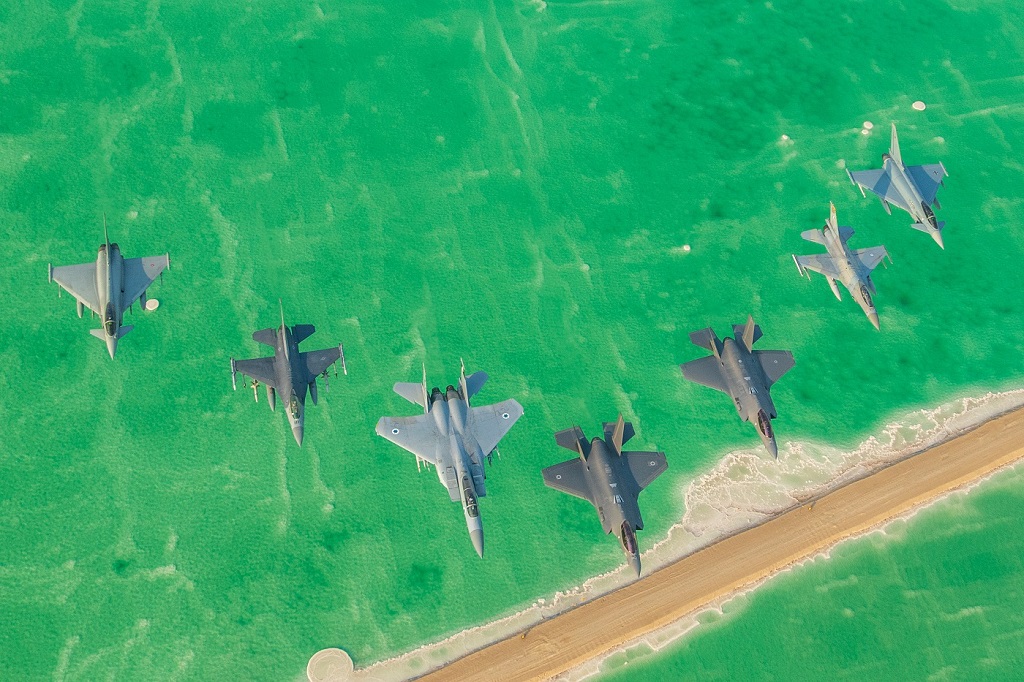
The Israeli Air Force hosted its Blue Flag 2019 exercise from Nov. 3 to 14 at Uvda AFB (or Ovda) north of Eilat, Israel. The exercise, held every two years and now at its fourth iteration since 2013, featured for the first time the F-35I “Adir”, the Israeli customized variant of the F-35A Lightning II. Italy, Germany, Greece and the US took part in the drill along with Israel, bringing a total of 70 aircraft and 1000 personnel to Uvda. According to reports Japan, United Kingdom, Croatia, the Netherlands, Spain and France participated as observers.
Actually, although not officially confirmed, even the Royal Jordanian Air Force has almost certainly taken part in the exercise. RJAF F-16s have been tracked online flying over Israel during Blue Flag:
⚠️🇮🇱🕵️♂️🇯🇴 It appears that JORDANIAN (RJAF) F-16AM and F-16BM (ex-RNLAF) fighter jets have been flying over both Israel and Jordan over the past four days (3-6 Nov) using “#NASHMI” (Arabic for “fragrance”) callsigns.
Here’s how I know.
(thread)#potn #avgeek #NASHMI1 #NASHMI2 pic.twitter.com/reIrW4IE6M
— Gerjon | חריון (@Gerjon_) November 6, 2019
Not only were RJAF F-16s spotted flying over Israel, but Israeli and other participating nations aircraft operated over Jordan during Blue Flag exercise:
— Manu Gómez (@GDarkconrad) November 12, 2019
Weird IAF KC-707 3J6C IAF088 tracking over #Jordan pic.twitter.com/FdIBLizWMf
— Manu Gómez (@GDarkconrad) November 10, 2019
Actually, the cooperation between the IAF and RJAF is far from secret.
In 2015, the Times of Israel media outlet reported that Jordanian air force pilots paid a “working visit” to Israel. That year, RJAF F-16s were dragged across the Mediterranean to Lajes Field by Israeli Air Force KC-707 Tankers. The aircraft were heading to Nellis Air Force Base, to take part in Red Flag exercise along with the Israeli F-15I.
While fighting in the Gaza Strip continues, so does exercise #BlueFlag2019: Here’s the four secret Jordanian F-16 participants again. Today not on a #NASHMI[1-4] callsign, but rather on a #WOLF[1-4] callsign instead.#potn #avgeek pic.twitter.com/Vkry5EmqaW
— Gerjon | חריון (@Gerjon_) November 12, 2019
Anyway, even without considering the RJAF, the Blue Flag 2019 was Israel’s most advanced international Air Force exercise:
This is the most advanced international Air Force exercise in Israel’s history.
🇮🇱 🇺🇲 🇩🇪 🇮🇹 🇬🇷
This is Blue Flag 2019.@IAFsite + @usairforce + @bundeswehrInfo + @ItalianAirForce + @HAFspokesman = Squad(ron) Goals pic.twitter.com/bjQmMtU9NG
— Israel Defense Forces (@IDF) 15 novembre 2019
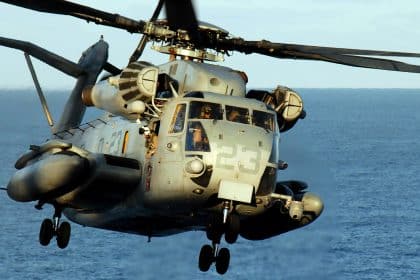
The guest assets deployed to Uvda were:
- Italy: six F-35As from 13° Gruppo (13th Squadron), six F-2000A Typhoons from 9°, 10°, 12° and 18° Gruppo (9th, 10th, 12th and 18th Squadron) and one G550 CAEW (Conformal Airborne Early Warning);
- Germany: six Eurofighters from Taktische Luftwaffengeschwader (Tactical Air Force Squadron) 71 “Richthofen”;
- Greece: four F-16M (Block 52+ Advanced) from 335 Mira (Bomber Squadron);
- US: 12 F-16CM Block-50 from the 480th Fighter Squadron.
The exercise was led by the 133rd Squadron “Knights of the Twin Tail” (operating the F-15 “Baz”), which planned the scenarios alongside the 115th Squadron. With the “Adir” participation in mind, scenarios had to be adjusted so fourth and fifth generation aircraft could integrate and train together, each with their own missions and targets. About that integration, Lt. Col. M’, commander of the 133rd Squadron, said: “The F-35 aircraft brings a significant advantage to the theatre, which allows the other aircraft to carry on with their missions while handling oncoming threats”.

The scenario of the exercise was based on two fictional Red and Blue neighboring countries, with the Blue forces focusing on Defensive Counter Air missions during the first week to protect allied territory and attack missions into Red territory during the second week. In total, 19 day and night sorties were flown during the two weeks.
The Red forces’ role was flown by the F-16Cs “Barak” of the 115th Squadron “Flying Dragon”, the aggressor squadron of the Israeli Air Force, supported by the Air Defense Array’s “Yahalom” (Patriot) batteries that simulated enemy SAM (Surface-to-Air Missile) systems. The F-35I also flew Red Air missions. “The Red force provides a significant challenge”, said Lt. Col. Panagiotis Katsikaris, commander of the Hellenic Air Force’s 335 Mira. “The reds started out easy during the first few flights, but we noticed their tactics changing as the days went by. They operated differently each day, and we had to act accordingly. Thanks to our mutual operation, we learned valuable lessons with each day”.
The F-35I “Adir” was the main guest of Blue Flag 2019 and this represented also the jet’s first exposure to foreign air forces in an international exercise. The “Adir” worked closely with the Italian F-35s to further develop the aircraft capabilities, as said by Lt. Col. T’, commander of the 140th Squadron “Golden Eagle”: “Our ability to sit together, brief, debrief and exchange information allowed us to take a step forward in our work, and see how each side does things differently while optimizing use of the aircraft’s capabilities”.
The logistics involved in the F-35’s participation to the exercise had to be planned six months in advance to provide for all spare parts and equipment needed. The maintenance effort was shared between the Israeli and the Italians, as said by Capt. Bar, a munitions officer at the 140th Squadron: The amount of equipment required for maintenance of the aircraft is large. We talked to the Italians in advance in order to support them with some of the equipment we brought from Nevatim AFB”.
The logistics preparation also provided an interesting fact: the F-35I couldn’t fit inside the Hardened Aircraft Shelters of Uvda AFB and some modifications had to be made. “We had to saw off some of the HAS’ concrete in order to properly fit the ‘Adir’ in. This means that Uvda is now capable of housing the ‘Adir’. Not all IAF airbases are capable of doing so, and this action is of great significance”, explained Maj. Roy, commander of Uvda’s Construction Unit.
Italian Air Force Gulfstream E.550 CAEW (MM62293) in flight over central #Israel and #Jordan participating in Blue Flag 2019 exercise pic.twitter.com/uK3QVNBYV2
— ItaMilRadar (@ItaMilRadar) 14 novembre 2019
German Air Force Eurofighter Typhoons in flight over southern #Israel participating in Blue Flag exercise. pic.twitter.com/wqXs5KIp9L
— ItaMilRadar (@ItaMilRadar) November 4, 2019
Another interesting fact is that in an area about 100 NM wide the Israeli Air Force is performing both real combat operations and an international exercise. As you may know, during the last few days Israel was subject to a barrage of rockets fired from the Gaza Strip, to which Israel answered with a series of air strikes. The training areas reserved to the exercise are located above the Negev desert and extend from Uvda AFB, at the southern end of the country, to the disputed areas of Gaza Strip and the West Bank. Aircraft participating in the exercise flew in close proximity to those hotspots, but they did not take part in any combat operation and were probably kept at a distance during the actual air strikes for risk reduction and air traffic deconfliction purposes.
The Aviationist’s Editor David Cenciotti contributed to this article.