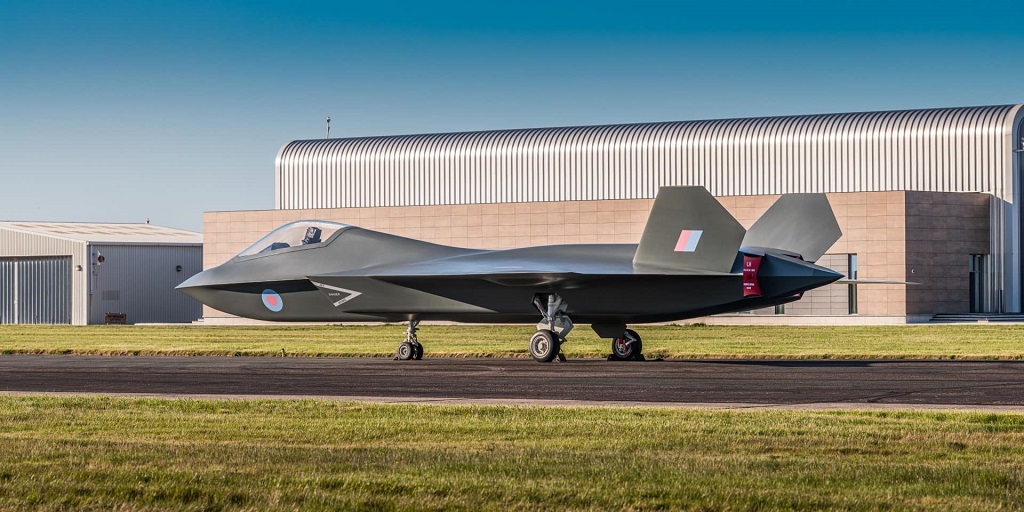
The three countries agreed to an equal cooperation for research, development and joint concepting of the Tempest FCAS ahead of the Project Arrangement and Full Development phase from 2025.
The Italian Minister of Defense Lorenzo Guerini, the British Secretary of State for Defence Ben Wallace and the Swedish Minister for Defence Peter Hultkvist signed a trilateral Future Combat Air System Cooperation Memorandum of Understanding on Dec. 21, 2020. The news was disclosed by the Italian Government only few days ago. This MoU arrived about a year after Italy officially joined the other two countries to develop Tempest.
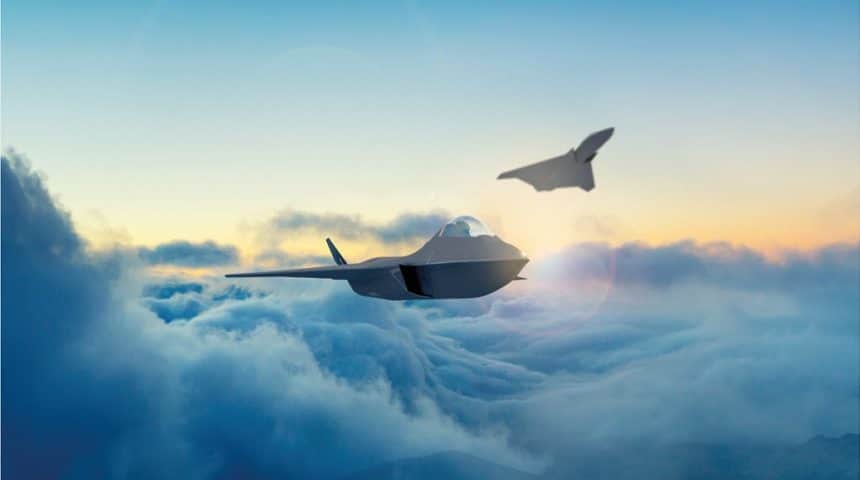
This Memorandum of Understanding covers the cooperation for research, development and joint concepting of the Tempest 6th generation fighter aircraft which will replace the Eurofighter Typhoon (in Italy and UK) and the Saab Gripen (in Sweden). The goal of the MoU is to have an equal participation of the signatory countries in the activities related to Tempest, with positive effects on each own defense industry, small and medium enterprises, research institutes and universities.
The Tempest programme is currently among the priorities of the three governments, which are now working to obtain a widespread industry participation to bring the best expertise to work on the many technology demonstrations currently in progress, while looking at the Project Arrangement and the beginning of the Full Development phase from 2025.
Similarly to the UK, the Italian government is starting a “Typhoon to Tempest transition”, with technologies developed for the Tempest being used also to upgrade the Typhoon. As a matter of fact, the latest Italian Defense Policy Document for 2020-2022 (Documento Programmatico della Difesa 2020-2022) mentions the first funds for the new aircraft among the funds assigned to the Typhoon fleet upgrade. This was also confirmed by the Minister of Defence during a recent parliamentary hearing, however the Tempest’s funds have not been officially allotted yet.
The Italian Ministry of Defence, in the press release, noted that Tempest will be a determining factor for the military and industrial capabilities at both the European and global levels. Because of this, there is also a call to evaluate a future integration with the other FCAS programme of France, Germany and Spain, in order to avoid the risk of competition between European groups, which would not be sustainable and become an advantage for other unspecified regional actors in the process of developing similar technologies, and to make the European product more competitive at the global level.
A similar concept was mentioned this summer also by Airbus Defense and Space CEO Dirk Hoke, who said that “maintaining two programs in Europe could be a “bad solution” for both the UK and the European Union, repeating the 1990s error of Europe having three combat aircraft developments in parallel: Eurofighter, Gripen and Rafale”, according to Aviation Week. The UK, however, dismissed these comments saying that their military strategy is different from France and Germany’s and the requirements of Tempest and FCAS are completely different, while Italy and Sweden have aligned views and similar needs to the UK’s. Moreover, they say that having two programs in Europe maintains “a degree of competitive pressure on our industries” without creating a monopoly on the supply of fighter aircraft.
On the contrary, the UK is looking for global partners to join Tempest, one of which was Japan with its F-X program. The F-X is meant to replace the F-2, Japan’s multirole fighter based on the F-16, with Mitsubishi Heavy Industries as main contractor and Lockheed Martin recently chosen as foreign partner. Other candidates were Boeing and BAE Systems. However, there is still space for cooperation as unspecified companies from the UK and the US will participate in propulsion and avionics development.

Talking about propulsion and avionics, we recently reported about the technologies in these fields that are being developed for Tempest:
Leonardo, which is the project lead for electronics, is developing a new radar technology called Multi-Function Radar Frequency System. The new sensor will reportedly collect and process 10’000 times more data than existing systems, or “equivalent to the internet traffic of a large city every second”, providing the operators with a clear view of the battlespace and of potential targets. According to the company, complete sub-systems have already been built and successfully tested, paving the way eventually to future airborne testing.
BAE Systems if working on another revolutionary concept, the “wearable cockpit”. In this case, the cockpit as we know it, full of switches, gauges and screens, becomes completely digital and all physical controls are replaced by Augmented and Virtual Reality systems. The new cockpit would be projected inside the pilot’s helmet and completely customizable according to the pilot’s preference and mission’s needs.
As human-AI teaming, a virtual copilot is being developed to interact with the pilot and provide support during the flight. “Psycho-physiological” technologies are also being trialed to study the operator’s physical and cognitive processes to better understand increasing exertion, stress, workload and fatigue. According to the company, some of these technologies are being tested controlled test flight conditions aboard the Typhoon to inform further development. MBDA UK is also working on the wearable cockpit concept to integrate weapons systems information and operations.
Rolls-Royce is working on the advanced combustion system technology that will power Tempest. The next-generation system is being designed to be hotter than previous ones to increase the efficiency of the engine, its range and speed, while reducing carbon dioxide emissions. Together with the higher-temperature combustion, there will be a new thermal management system that will use the turbine as a heat sink to recycle thermal energy, removing the need for overboard venting and improving the efficiency, and an increased electrical power production, reportedly in the order of one megawatt, that will be used to power all the aircraft’s subsystems.
This follows the assessment by Rolls Royce that future fighter aircraft will have unprecedented levels of electrical power demand and thermal load that need to be managed accordingly to maintain the airframe’s low observability. Being more specific, the company stated that they will integrate an Electrical Embedded Starter Generator that will function both as an APU and as an electrical generator after the engine is spooled up.