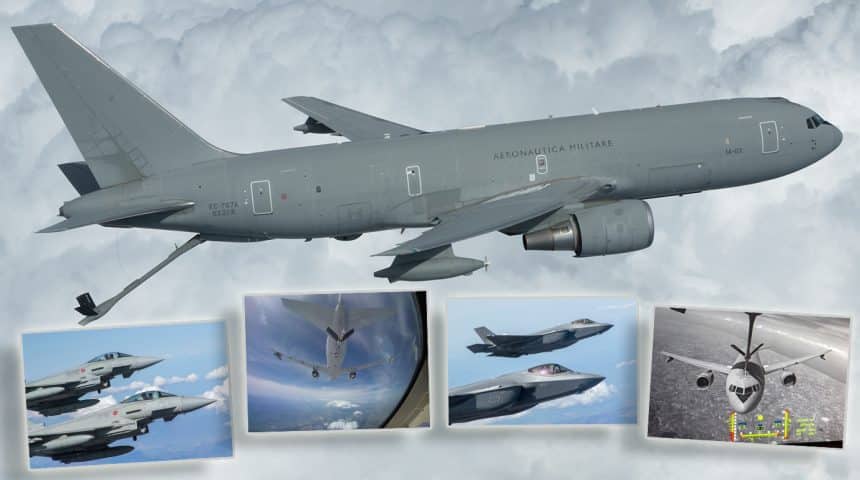
We took part in a mission aboard the Italian Air Force KC-767 and had the opportunity to refuel receivers using different both the “flying boom” and “hose and drogue” systems.
The Italian Air Force (Aeronautica Militare) operates a fleet of four Boeing KC-767A Tanker/Transport aircraft. The KC-767s are assigned to the 14° Stormo (Wing) based at Pratica di Mare airbase, near Rome, and flown by the 8° Gruppo (Squadron). The 767s are among the most in-demand assets of the Italian Air Force: while their primary role is AAR (Air-to-Air Refueling), the KC-767A, in both Cargo, Combi and Full Pax configurations, can be used for strategic transport missions as well as MEDEVAC (Medical Evacuation) or Bio-Containment missions. The latter have become particularly important last year, with the outbreak of the Coronavirus pandemic, when the wide-bodies carried out both repatriation flights of Italian citizens stranded abroad by the first wave of lockdowns, and biosafety containment missions of Covid-19 patients.
The first Italian KC-767A (MM62229/14-04) was delivered to the 14th Wing little more than 10 years ago, on Jan. 27, 2011. Few weeks later, the type had its “baptism of fire” in Libya, boosting NATO’s AAR capability by supporting Italian Eurofighter, Tornado IDS and ECR, and AMX jets involved in Operation Unified Protector. Since then, the fleet has achieved a lot of experience supporting all the various Italian real operations and deployments around the world (to Iceland for NATO Air Policing; to Kuwait for Operation Inherent Resolve; to Red Flag, just to name but few) and the major multinational exercises, as well as becoming the first international tanker to refuel an F-35.
With more than 30,000 flight hours since they entered active service (a milestone achieved in 2020), the KC-767 fleet has proved to be a force multiplier not only for the Italian MOD but also for NATO: for example, the Italian tankers refueled the British Eurofighters on their way to LIMA 13 airshow; dragged the Spanish EF-18 and Eurofighter Typhoons to Konya, in Turkey, for Anatolian Eagle; supported the Czech Air Force Gripen deploying to Keflavik to take over the Icelandic Air Policing mission. Support of allied air forces is pretty much routine.
In fact, the Italian KC-767s are also assigned to the EATC (European Air Transport Command), the multinational command headquartered at Eindhoven AB in the Netherlands whose goal is to improve the effectiveness and efficiency of the member nations military air transport efforts by “pooling and sharing” assets to optimize resources and fill the shortfall of EU tankers highlighted by the Libya Air War in 2011.
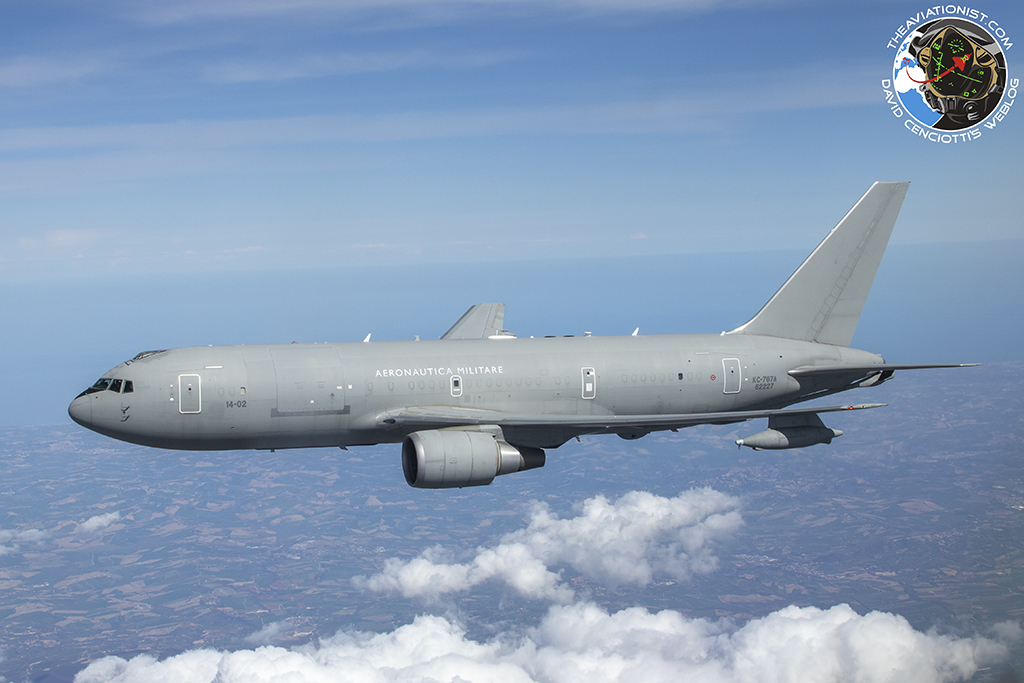
The KC-767A
Based on the commercial B-767-200ER (Extended Range), the KC-767A is equipped with both the sixth generation flying boom (similar to the one of the American KC-10), and three hose and drogue stations (WARPs – Wing Air Refueling Pods). This dual capability gives the KC-767A a significant flexibility: during the same mission the tanker can refuel both aircraft equipped with onboard receptacle and those with an IFR (In-Flight Refueling) probe. The tanker is itself equipped with a receptacle, meaning that it can be refueled by another KC-767 extending its range (or on-station time).
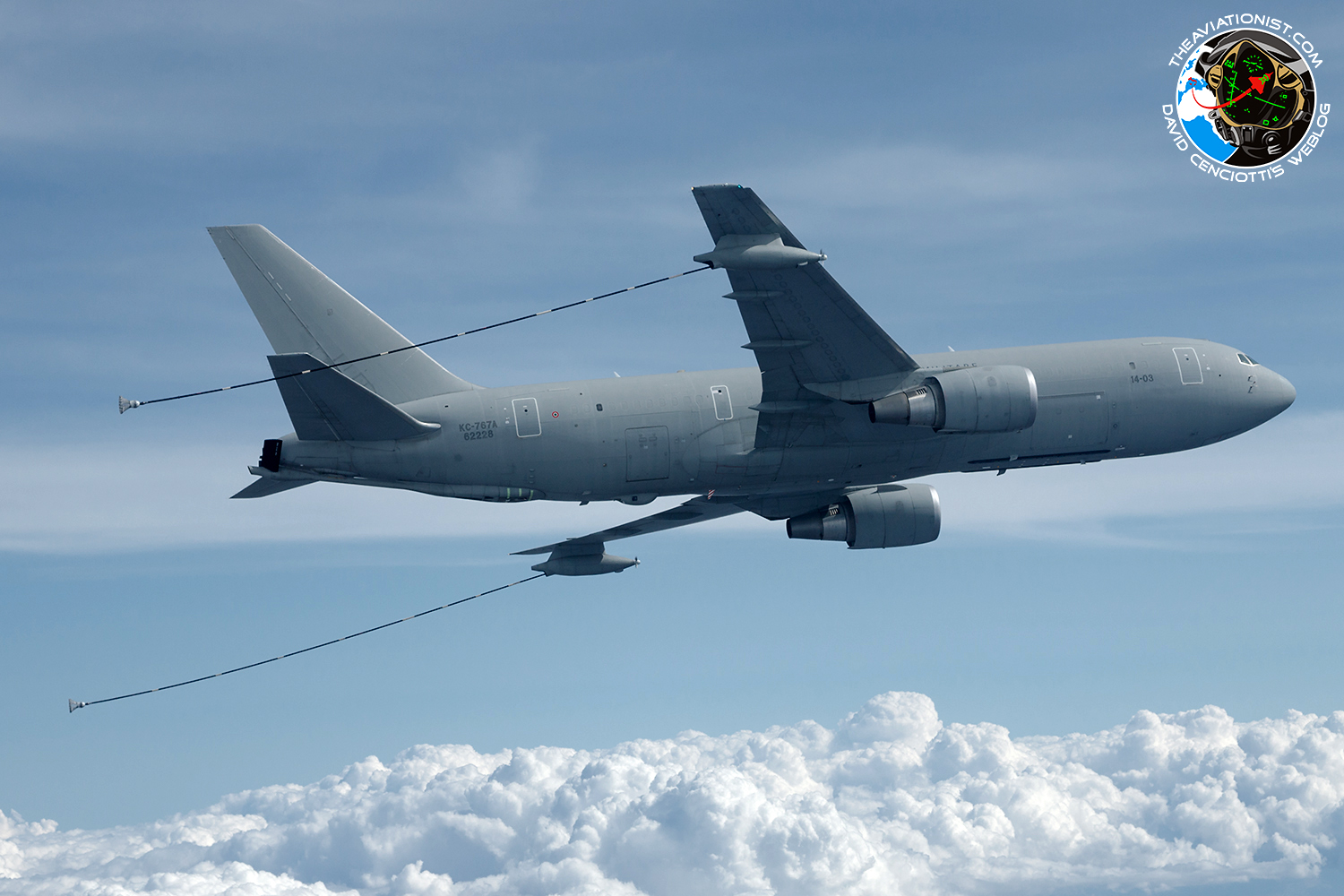
The aircrews of the 8° Gruppo are also capable of “buddy refueling operations”: a KC-767 can refuel another KC-767 mid-air using the flying boom and the aircraft’s receptacle, further extending the aircraft endurance.
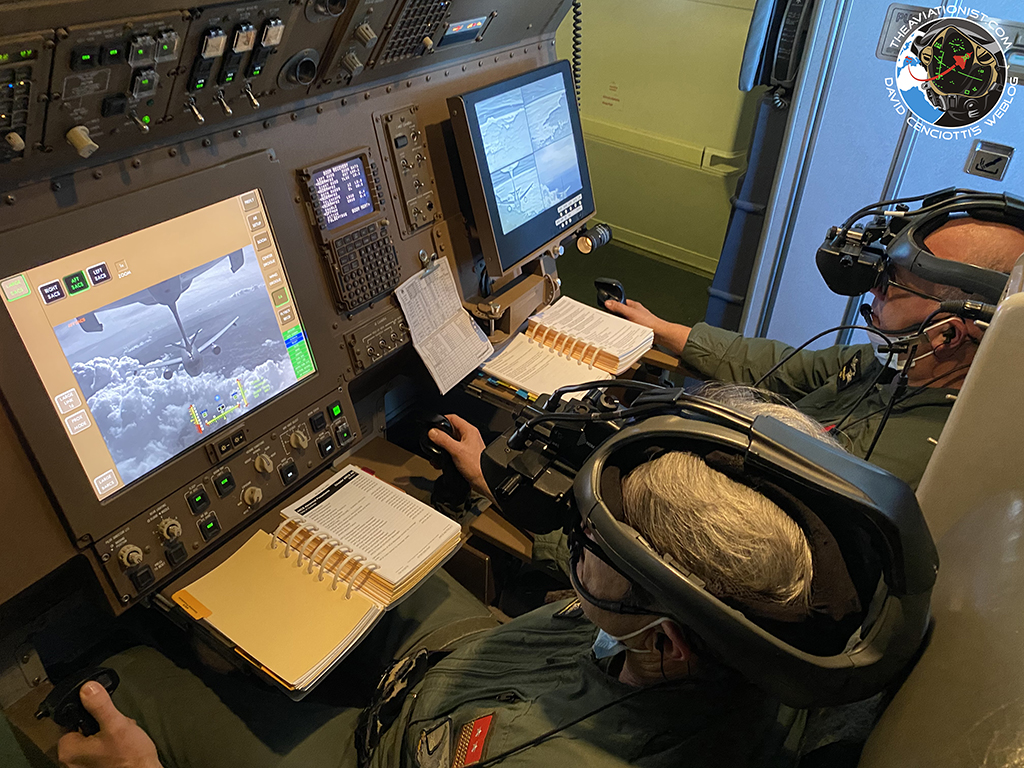
Unlike the “legacy” refuelers, as the U.S. Air Force KC-135 Stratotanker, where the “boomer” (as the operator of the boom is nicknamed) watches the receiver through a rear observation window, in the KC-767 the ARO (Air Refueling Operator) move the boom using a joystick while watching the video coming from a series of cameras mounted on the tanker’s rear fuselage. The advanced camera system feeds a Remote Vision System (RVS) that provides high-definition stereoscopic imagery to the vision goggles attached to a sort-of flight helmet worn by the boomer during the air-to-air refueling.
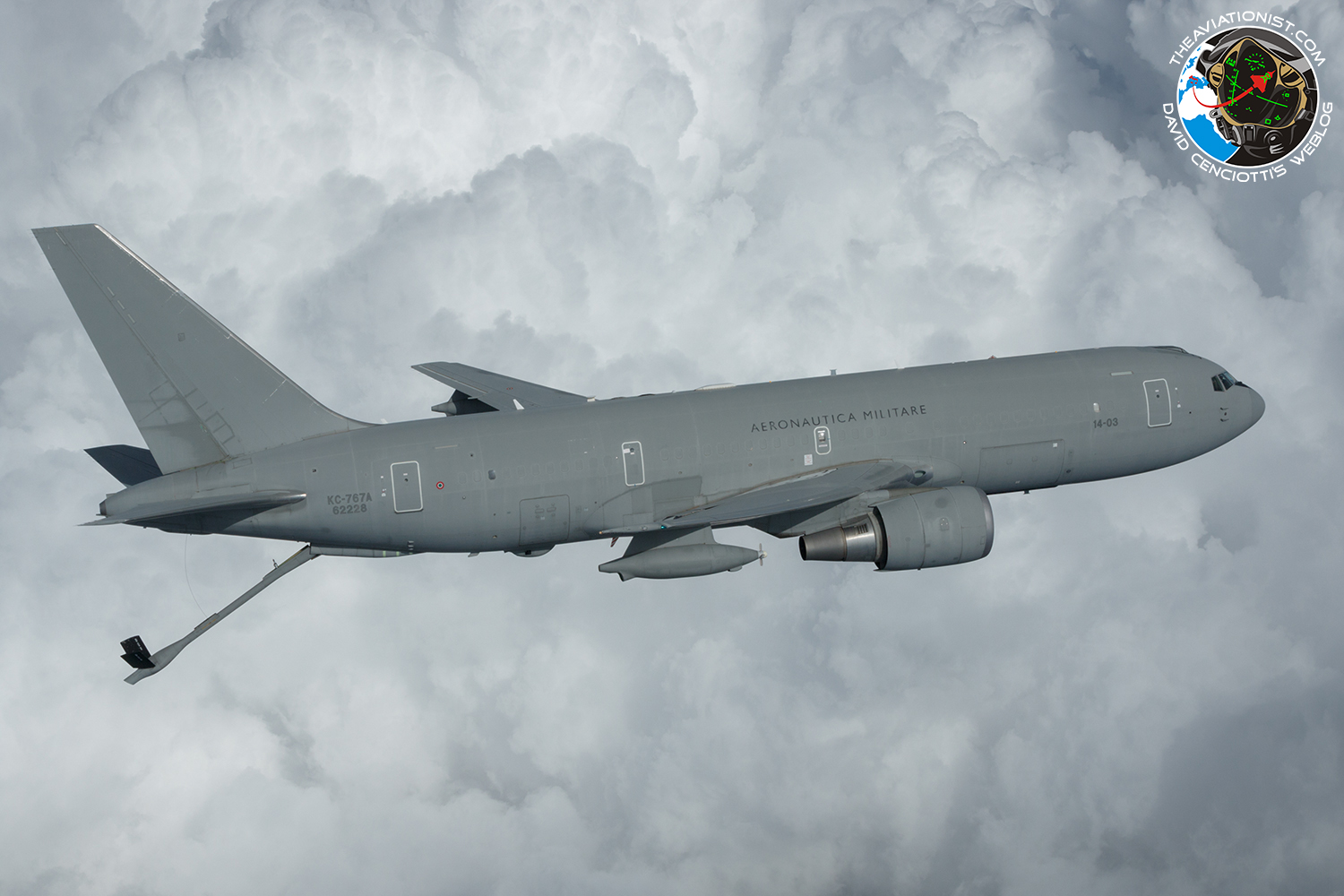
While a Boeing 767 derivative too, the KC-46A Pegasus the U.S. Air Force selected to replace the older KC-135 features a stretched fuselage, different engines, cockpit, wings and boom: in other words, it’s almost a completely different tanker.
We recently took part in an AAR mission aboard an Italian Air Force KC-767A of the 14th Wing. Here’s how it went.
“Petrol 42”
Pratica di Mare AB, Apr. 1, 2021.
Two KC-767s (callsigns “Petrol 41” and “Petrol 42”), along with a KC-130J of the 46^ Brigata Aerea (Air Brigade) from Pisa AB, are tasked to refuel all the assets involved in the second and last day of a COMAO (Composite Air Operations) exercise held by the Italian Air Force. The list of receivers the three tankers need to support includes all the tactical aircraft of the Aeronautica Militare: F-35As from Amendola Air Base; Tornado IDS and ECR jets from Ghedi AB; AMX Ghiblis from Istrana AB; and Eurofighter Typhoons from Grosseto, Trapani, Gioia del Colle and Istrana AB.
The three refuelers are assigned different chunks and levels of the R48, a large restricted area located over Central Italy. “Petrol 42”, in dual “boom” and “hose and drogue” configuration, is tasked to refuel two F-35As, two Typhoons from Istrana and two Tornado IDSs; “Petrol 41”, in “hose-only” configuration, is assigned Typhoons from Grosseto; the rest of the tacair jets will be “served” by the KC-130J (a type of tanker that can only refuel aircraft equipped with an IFR probe).
The two KC-767s will depart about 15 minutes apart: “Petrol 42” (with the Author on board) will take off first, followed by “Petrol 41”. Separated in time, the two tankers will head towards the refueling area, where they will operate at FL220 and FL200 respectively. The plan is to spend little less than 4 hours “on station”: after completing the aerial refueling of the COMAO “chicks”, there will be time for buddy refueling, with plugs that will allow some pilots and AROs of the 8th Gruppo to renew their currencies.
We depart Pratica in perfect time, at 12.45LT. We climb on the assigned SID (Standard Instrumental Departure), in contact with Rome ATC (Air Traffic Control), and after a few minutes, we are cleared to proceed direct to the R48. Approaching the area we are instructed to switch to “Pioppo”, the GCI (Ground Control Intercept) that will manage the operational traffic in R48 acting also as tanker management agency, assisting the receivers in their rejoin with the KC-767.
We take the northeastern part of the area and start the pre-refueling checks.
“Petrol 42, on station”: we are ready to refuel.
We have lowered the boom while the AROs, wearing the HMD (Head-Mounted Display) system of the RVS prepare for the first receivers. By the way, one of the two “boomers” wears a patch that celebrates his 4,000 FH aboard the KC-767 patch (!!).

Our first “customers”, two F-35As of the 32° Stormo, are already in contact with Pioppo. The controller provides BRAA (Bearing Range Altitude Aspect) and radar vectors to the two Lightning II jets as they approach the rendez-vous point 1,000 feet below the tanker’s level. As soon as they call the “visual contact”, Pioppo instructs the two stealth jets to contact us on a discrete “boomfreq”.
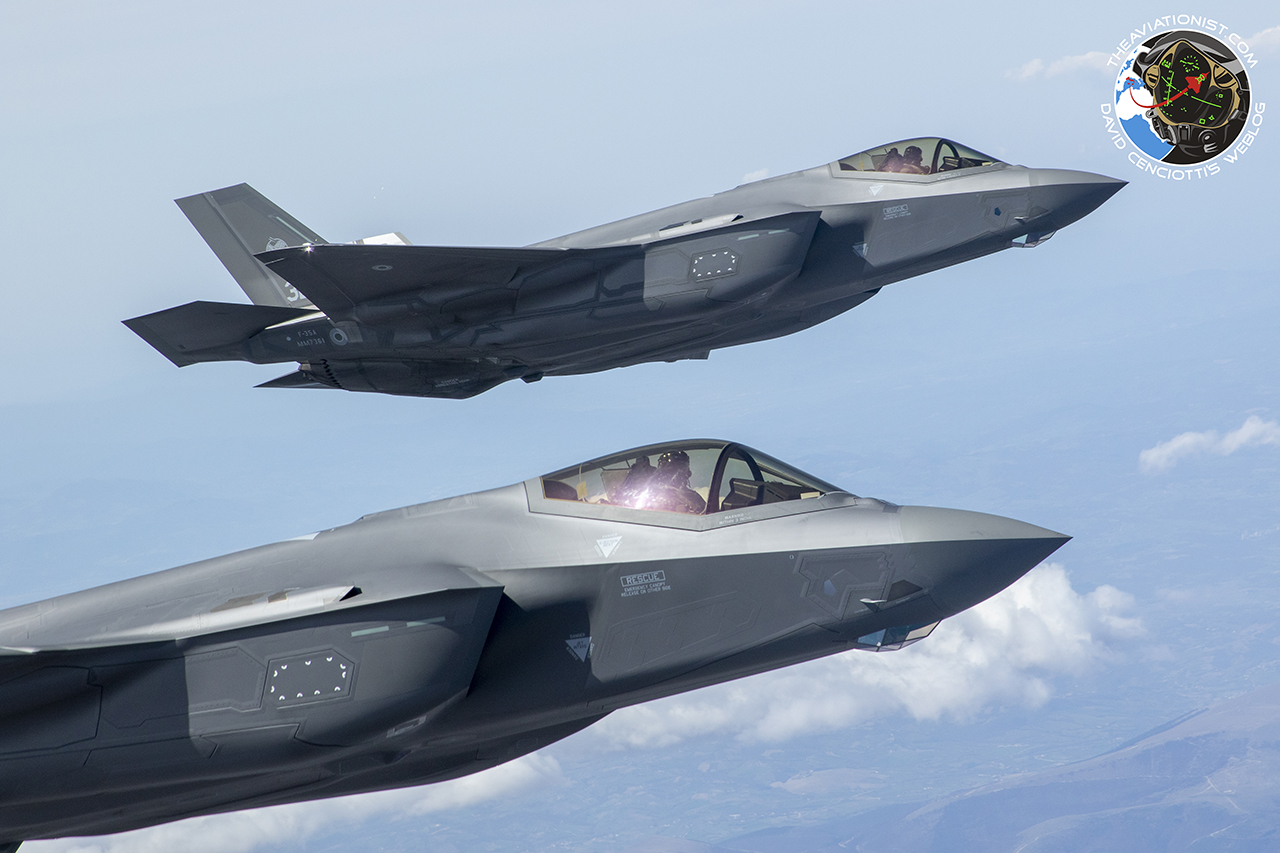
“Confirm nose is cold, weapons safe, you are cleared echelon left”. The two Lightnings, approaching the tanker from astern, move to the left observation position before being instructed to move in trail.
Once the F-35 is the right position, the ARO guides the boom to the dorsal receptacle of the stealth jet. All is “green” after the plug: the refueling starts. In a matter of minutes both the Lightnings are “happy”, move to the “right observation” position and leave the tanker 1,000 feet above us.
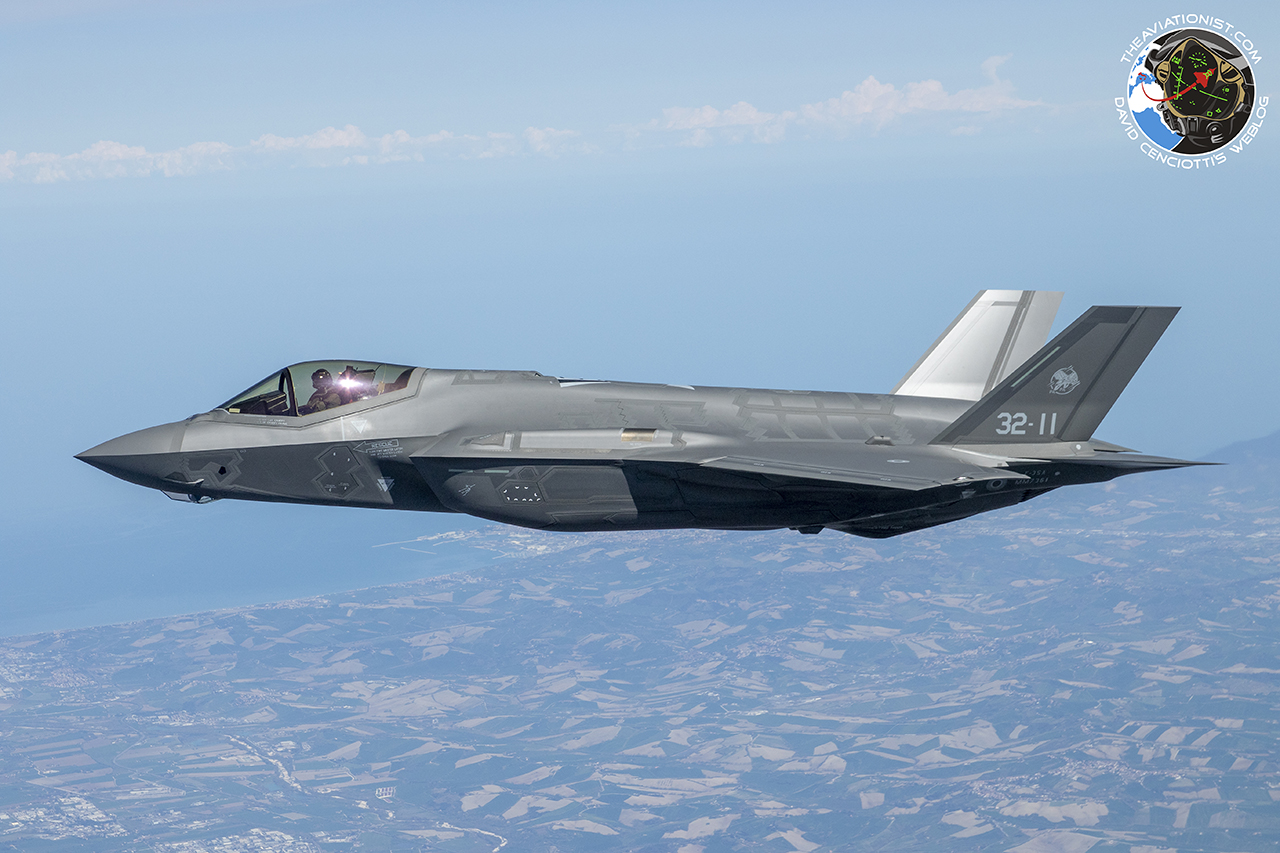
As the F-35s depart the tanker to continue their mission, the KC-767 is configured for the next receivers: two Tornado IDS aircraft. Since these are equipped with probe, the boom is retracted and the hoses are extended from the two underwing pods. The “switch” from one configuration to another one takes only few minutes and we are soon ready to refuel “Devil” flight.
Only one Tornado needs fuel today and the procedure is always the same: left observation, then clearance to move astern one of the baskets (in this case the left one). Once in pre-contact position, the “Tonka” is cleared to contact: in this case, the AROs have little to do besides monitoring the refueling operation through the displays that show the video feeds from the back cameras, and talk to the receiver on the radio.

The Tornado IDS unplugs the probe from the basket, moves to the right observation and leaves the tanker to continue the assigned mission.
The next receivers, coming in 45 minutes, will be two Eurofighter Typhoons from Istrana AB: there’s some time for a first round of “buddy refueling” with “Petrol 41” that has also completed its AAR with the F-2000As (as the single-seat Typhoons are designated in Italy) from Grosseto.
We retract the hoses and lower the flying boom while the other KC-767 climbs, under radar control, to rejoin with us. Some 15 minutes later, “Petrol 41” is in pre-contact position, just behind us. We follow the refueling operation through the ARO’s displays.
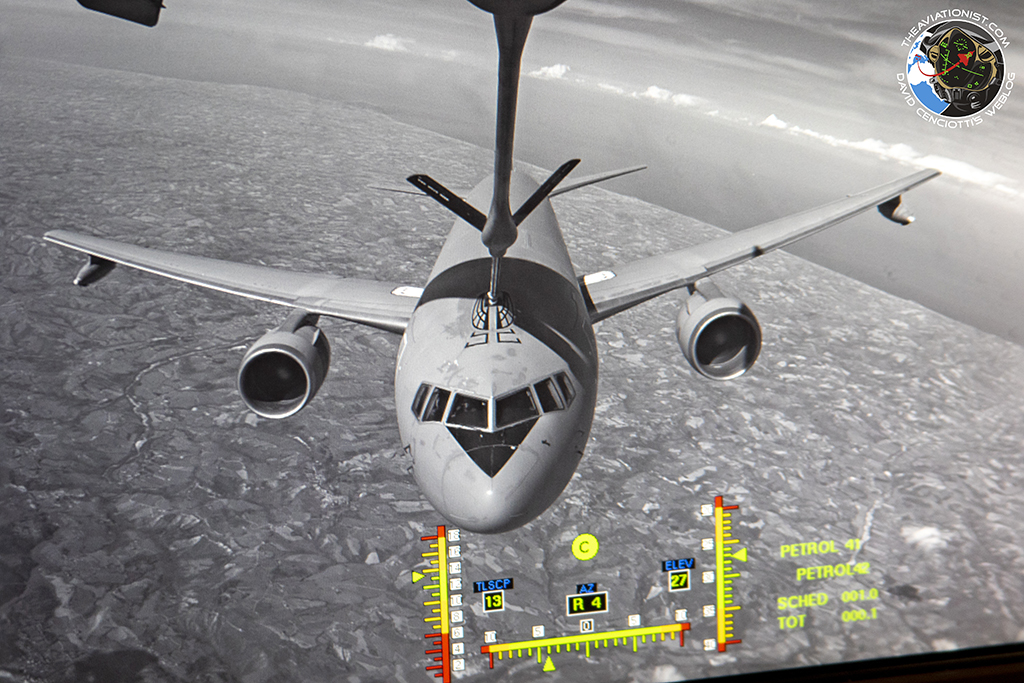
The size of the other tanker is quite impressive even when observed through a remote camera system. While the earlier contacts of the flying boom with the F-35’s receptacle were almost imperceptible, the plug with the much larger KC-767 is far from subtle: it shakes the whole tanker a bit.
View this post on Instagram
We carry out multiple “dry” and “wet” (with actual fuel transfer) plugs, before it’s time to reconfigure for the next receivers.
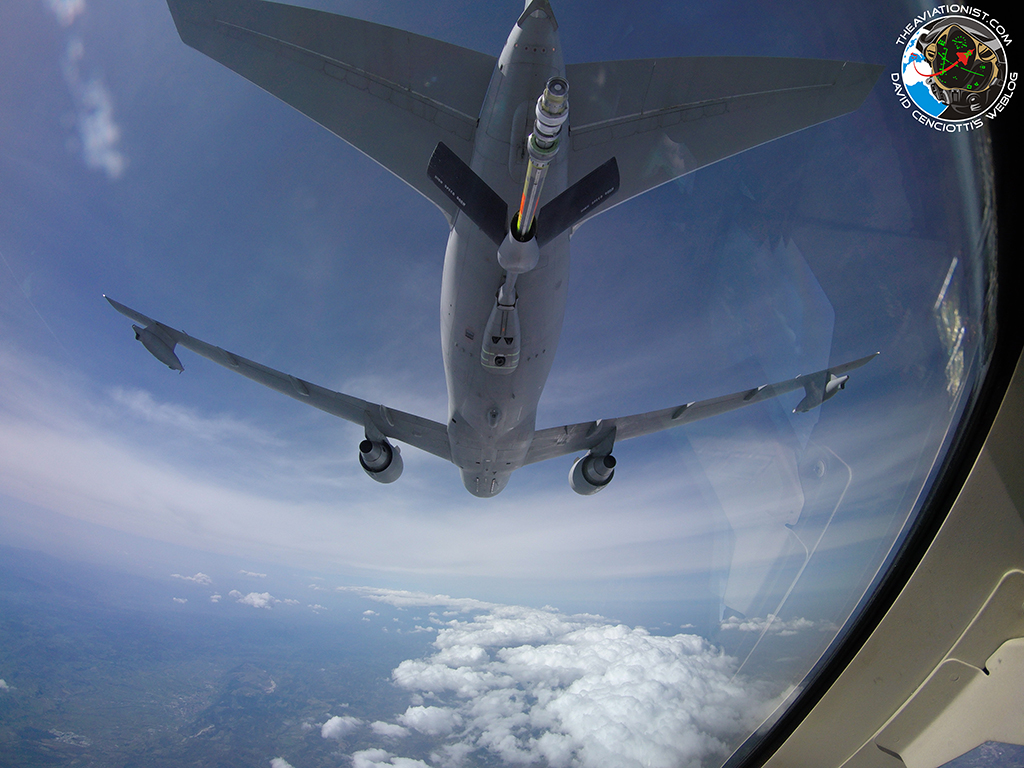
“Petrol 41” remains with us, in a loose formation, far enough so that it does not interfere with the refueling operations of the arriving F-2000s.

Soon, the two Typhoons are on the tanker’s left wing, ready to refuel: they are from the 51° Stormo (Wing) and assigned to the 132° Gruppo (Squadron), the most recent Italian Air Force Typhoon unit (the 132nd currently flies both the Eurofighters and the last AMXs).
The two jets move from the left observation to the pre-contact position astern of the hoses and then start refueling, concurrently, from “Petrol 42”.

Once again, in a few minutes the procedure is completed: the two Typhoons leave the tanker, while we retract the hoses in the WARPs and prepare for some additional buddy refueling operations inside R48 at different levels.
After some 3h 30m of aerial refueling ops inside R48 we call “off station” and start returning home, splitting from “Petrol 41”.
Have you ever seen a “tanker break”? Here’s the one I filmed on Apr. 1, 2021: an @ItalianAirForce KC-767 breaks formation after buddy refueling with another KC-767 (the camera ship I was aboard). pic.twitter.com/NlEwTXjQu5
— David Cenciotti (@cencio4) April 10, 2021
We land at Pratica di Mare shortly before 17.30LT, about 5 hours after take off: “business as usual” for the aircrews of the 14° Stormo; an extremely interesting experience for us.

The Author wishes to thank the ItAF Public Information Office and the 14° Stormo for the help provided before, during and after the flight.