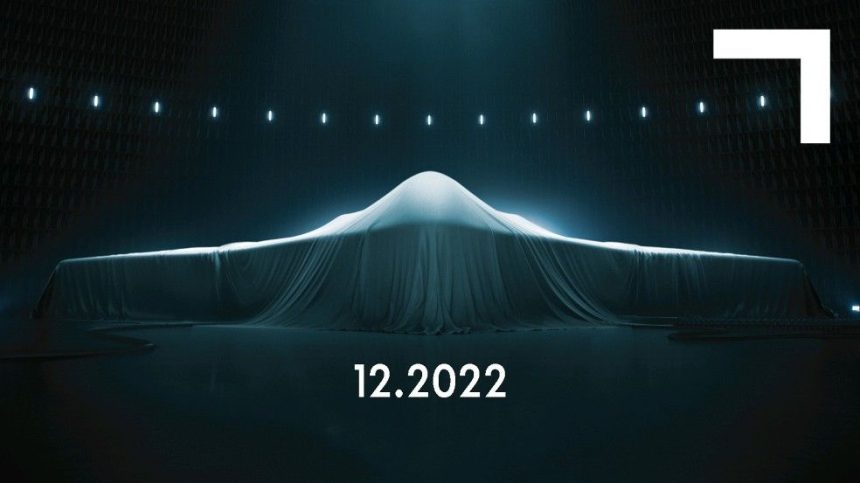
Northrop Grumman and the U.S. Air Force have announced that the roll out of the B-21 Raider will be in early December.
“Northrop Grumman Corporation, in partnership with the U.S. Air Force, will unveil the B-21 Raider during the first week of December at the company’s Palmdale, California facility.” This is the first sentence of the press release that the company has sent out on Sept. 20, 2022, announcing the roll-out of one of the most anticipated rollouts of the last decades: the one of the U.S. Air Force’s next stealth bomber built by Northrop Grumman and destined to replace the B-1 and B-2 fleets.
“Since contract award in 2015, Northrop Grumman has assembled a nationwide team to design, test and build the world’s most advanced strike aircraft. The B-21 is a product of Northrop Grumman’s pioneering digital engineering practices and advanced manufacturing techniques together with breakthrough stealth technology,” says the release, that calls the new bomber “a sixth-generation aircraft optimized for operations in highly contested environments,” using the words of Tom Jones, corporate vice president and president, Northrop Grumman Aeronautics Systems.
The unveiling will take place at Northrop Grumman’s Palmdale site where the bombers are being built. But, what are we going to see?
In 2016, Air Force Secretary Deborah Lee James revealed the first artist rendering of the Long Range Strike Bomber designated the B-21, at the Air Force Association’s Air Warfare Symposium in Orlando, Florida, that showed a concept designed around a standard flying wing quite similar to the B-2’s rather than a “cranked kite” or a kite (like those seemingly spotted over the Wichita and Amarillo back in 2014).

Then in January 2021, the Air Force Global Strike Command shared on their Facebook page new artist renderings of the B-21 Raider concept shown in hangars at the three locations where the nation’s newest stealth bomber will be housed: Dyess Air Force Base, Ellsworth Air Force Base and Whiteman Air Force Base. We analysed those artworks in details here.

The shape of the new aircraft has already been teased by several renderings, including the most recent one that dates back to July 2021.
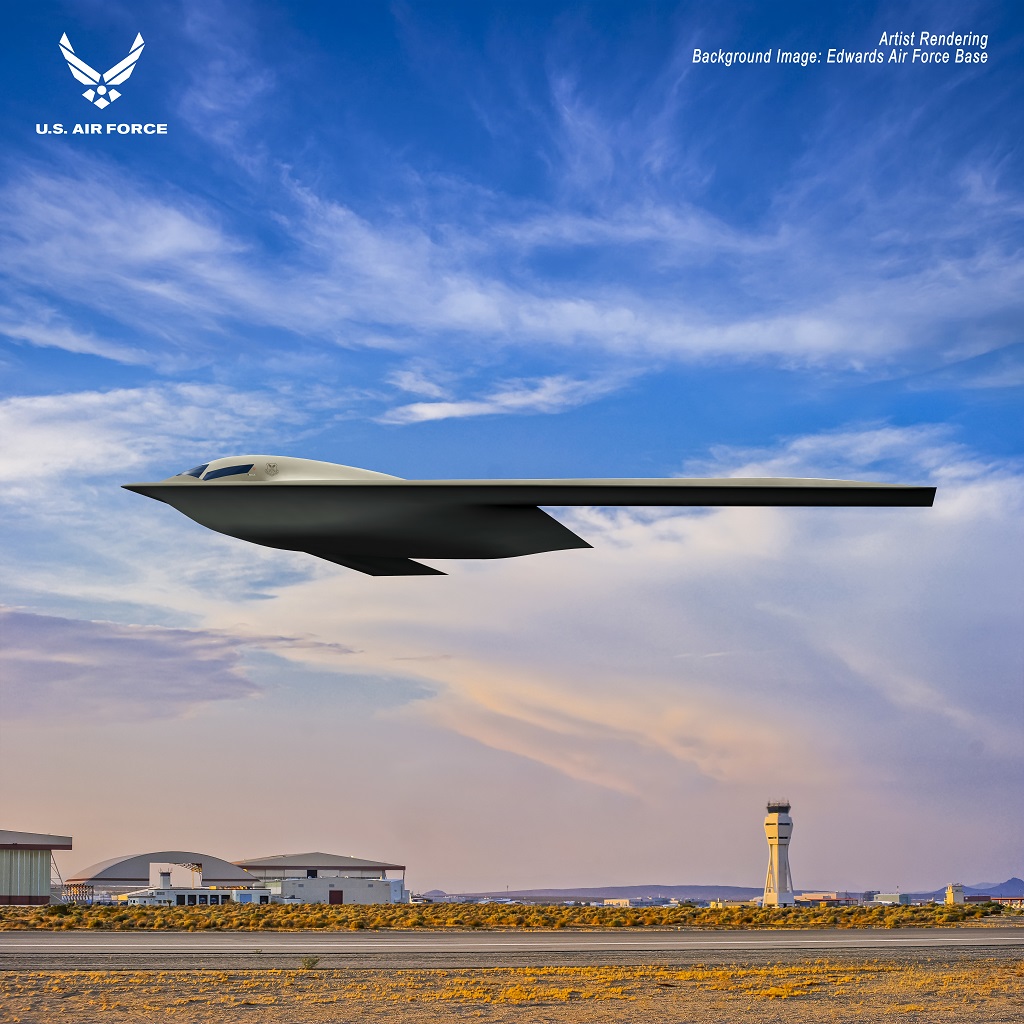
This was what we noticed in the last artwork:
The overall shape of the Raider seems to be unchanged since the 2020 rendering, with just few details noticeable and worth a mention. The first, most eye-catching detail is the new set of cockpit windows. The old rendering showed a two-pieces windscreen which resembled in shape the one of the B-2A Spirit. This time, the Raider has a new four-pieces windscreen, like the Spirit, but with a very different shape for the two lateral windows. The side windows appear to be arched and narrower than the ones in the front (about half the height).
The second detail is the peculiar “hawk’s-beak” profile, inherited from the B-2 Spirit and which seemed missing or barely noticeable in the second rendering. This time the “beak” seems much more pronounced than the one of the Spirit. Another detail can be found on the wings which seem to be thicker than in the old renderings, but this might just be due to the perspective in the image.
There is not a trace of the air intakes in this new rendering. This is one of the parts of the new bomber that, as described by the Air Force earlier this year, required a major redesign before the critical design review in November 2018. The problem was reportedly about the size needed by the air inlet to obtain the right volume flow rate of air for the engines to work efficiently, but it did not impact the cost and schedule of the program.
The B-21 Raider is described in the fact sheet as a component of a larger family of systems for conventional Long Range Strike, including Intelligence, Surveillance and Reconnaissance, Electronic Attack, communication and other capabilities. It will be able to employ a broad mix of stand-off and direct-attack munitions, as well as retaining a nuclear capability, and designed to accommodate manned or unmanned operations. Another important feature, present also in other Air Force projects like NGAD, is the open systems architecture which will reduce the integration risk and enable competition for future modernization efforts, allowing the aircraft to evolve as the threat environment changes.

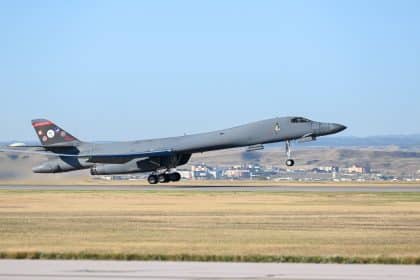


The new bomber, that the U.S. Air Force plans to procure in 100 examples has a lot of things in common with the B-2; the main differences are the “W” shaped trailing edge of the Raider that is an evolution from the Spirit’s sawtooth trailing edge and the overall size and weight: the B-2’s wingspan is 172 feet while the B-21 has a payload requirement said to be between two thirds and half that of the B-2. That’s why the Raider will probably be lighter featuring a wing span smaller than that of the Spirit. And this is probably the most interesting thing we are going to assess at the public unveiling: the size comparison to the B-2.
Six B-21 test aircraft are in various stages of final assembly in Palmdale, California, according to Northrop Grumman. The first flight is projected for 2023. The actual timing of first flight will be based on ground test outcomes.
The new bomber is expected to be ready for service around 2026 or 2027, with Ellsworth Air Force Base, South Dakota, being the preferred location for the first B-21 main operating base, and Dyess AFB, Texas, being the alternative.