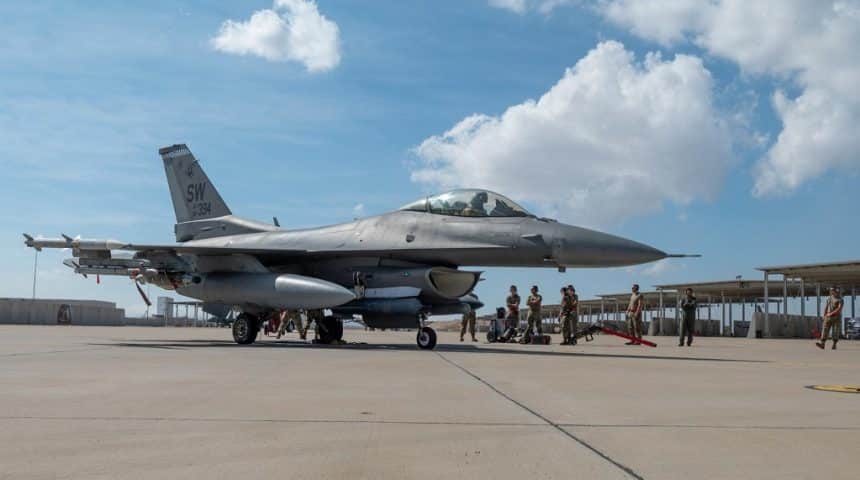
Soon after the recent Ramstein summit, during which president Zelensky requested again F-16s, the Ukrainian Air Force said a Western type of aircraft has been selected and will possibly be provided to Ukraine.
After being able to obtain large numbers of Western tanks (potentially up to 175 so far, including M1 Abrams, Challenger 2 and Leopard 2 tanks), Ukrainians negotiations are now focusing on the supply of Western fighter aircraft and something might already be in motion. In fact, on Jan. 24, Colonel Yuriy Ignat, the speaker of the Ukrainian Air Force, said that a cooperation in this area is being actively discussed.
“Our military pilots traveled to the United States, funds were allocated for the training of our pilots. That is, the aviation topic has never left the agenda”, said Col. Ignat in a statement to Ukrainian television. “The type of aircraft that will probably be provided to Ukraine, and the corresponding terms for training has already been determined.”
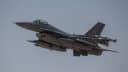
While Col. Ignat did not provide further details to substantiate his claims, Ukrainian officials most of the times specifically requested to be supplied F-16 Fighting Falcon jets (or “Vipers”, as the pilots call them). Among those, we find president Zelensky, who appealed the participants of the Ramstein summit held on January 20 to give Ukraine F-16s and long-range missiles. Oleksiy Danilov, Secretary of the National Security and Defense Council of Ukraine, even published a F-16 video on his official Facebook account, accompanied by “Soon in Ukrainian skies”.
The supply of Western fighter jets has been one of the top requests from the Ukrainian government since the start of the war, but so far this request did not yield concrete results, also for fear of further escalations. The assistance instead focused on the supply of weapons, including the AGM-88 HARM that was adapted on MiG-29s and Su-27s, and spare parts to keep Ukrainian aircraft in the fight.
Two Ukrainian fighter pilots, identified by their callsigns “Juice” and “Moonfish”, reportedly traveled to Washington in June 2022 to urge lawmakers to support Ukraine with aircraft and training. They described their combat sorties, flying outdated MiG-29s against the latest Russian fighter jets, as “suicide missions” and said that Russian pilots changed their tactics to better counter to the ones used by the Ukrainian Air Force.
“Juice” and “Moonfish” also asked for F-16s during their visit to Washington, mentioning that Ukrainian pilots are eager to start training on the F-16 and are taking English lessons in their free time to get ready for this. They said one of the reasons the F-16 is being requested is its Suppression of Enemy Air Defenses capabilities. Even without the Harm Targeting System pod (which has never been exported outside the US), the F-16 is still a formidable SEAD asset.
In late 2022, Col. Ignat further detailed the Ukrainian requests for fighter jets. As the Ukrainian Air Force flies in squadrons of 12 aircraft, he said that two F-16 squadrons plus reserve aircraft might be enough to turn the tide of the war with Russia. While being aware that the transfer of F-16s by any nation would require US approval, Col. Ignat said that Ukraine is ready to follow the lead of the neighboring Poland and Romania that already made the same transition from MiG-29s to F-16s.
At the time of writing, however, no one confirmed the claims about an aircraft already being selected, with the Pentagon also saying they don’t anything to announce on that front. The same was mentioned by Air Force Brig. Gen. Pat Ryder, as reported by The War Zone after a press conference this week. “Nor, again, do I have anything to announce when it comes to aircraft. As we’ve said all along, we’re going to continue to have a robust discussion with the Ukrainians on what their defense needs [are] that includes the near term, the medium term and the long term.”
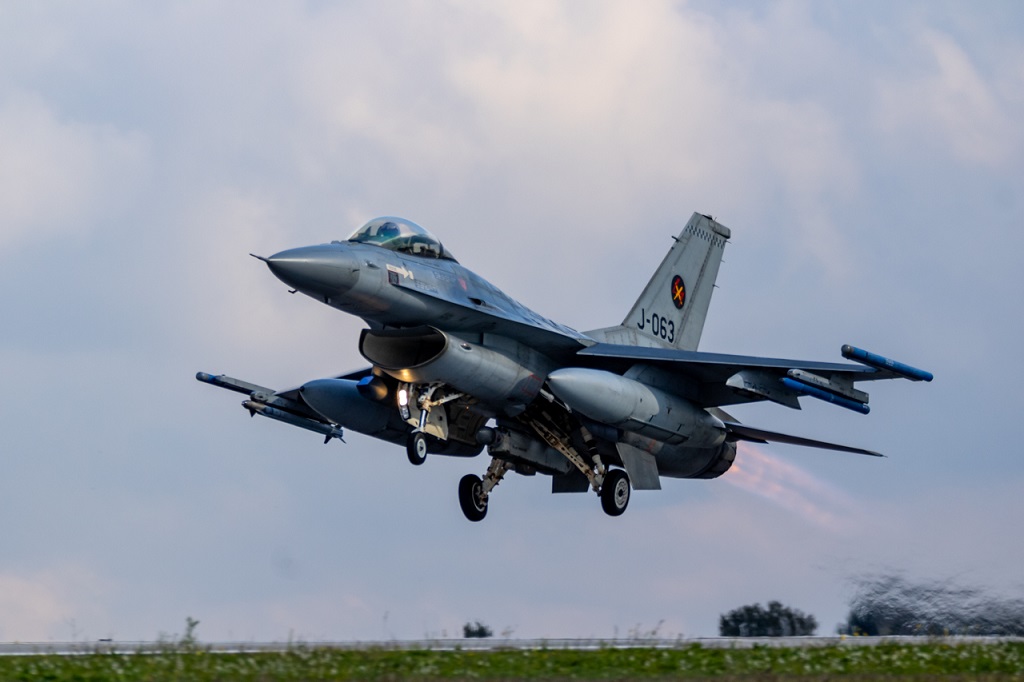
The Dutch government, which just a few days ago said it was ready to consider the delivery of F-16 fighters to Ukraine with an “open mind”, also retracted saying there are no plans to supply aircraft currently and that it seems unlikely to happen in the near term. “That is a very big step, bigger than tanks,” said Prime Minister Mark Rutte, adding that no such request has been received from Kyiv by the Dutch government.
Back in November 2022, Col. Ignat said that a cadre of pilots was already chosen should the possibility arise to train them on Western fighter jets. He later detailed that at least 30 pilots with sufficient English proficiency were chosen for this and are ready to travel at any time to the United States together with ground crews and maintainers to be trained.
However, giving F-16s to Ukraine is easier said than done. There are so many factors to consider, including training, maintenance, logistics, etc. Sensitive material will play a big part too. Just as Abrams tanks will need to be “cleaned” before heading to Ukraine because of their classified armor technology and electronic systems, F-16s might need to have parts removed, like AESA radars and targeting pods, to avoid them ending in Russian hands if shot down.
Former US Air Forces in Europe commander Gen. Jeffrey L. Harrigian, commented about the possibility of supplying F-16s to Ukraine. “That doesn’t happen fast. At the end of the day, we’ve got to leverage what they have and offer them some other unique capabilities to make the problem challenging, and then there’s the longer-term view,” said the General. “Collectively, we’ve got to step up and understand what the Ukrainians’ requirements are and find a way to get it to them and get it to them quick. You just don’t throw somebody an F-16 and wish them good luck. That is not a recipe for success, and we want to set them up for success.”
Some Twitter accounts even claimed that Ukrainian pilots have already been training on F-16s for a while in the US, saying that training began in April and then again in October. Officials however denied, with Gen. Ryder saying “I’m not aware of any Ukrainian pilots currently training in the United States, to my knowledge, despite what those foreign press reports are saying.” Previous statements also mentioned that “there are no current plans to train Ukraine on any air platform other than those that they are using every day effectively in the battle right now”.
The only official mention of training for Ukrainian pilots arrived from the U.S. House of Representatives, which added an amendment to the 2023 National Defense Authorization Act that would authorize $100 million to provide training to Ukrainian pilots and ground crews on American aircraft. However, adding to uncertainty of whether the training will start for real, this amendment was not found in the final version signed into law by President Biden last December.
Should the training start for real, there isn’t an exact timeline to expect. While the former commander of the Ukrainian Air Force optimistically said in April 2022 that his pilots could learn to fly Western jets in just two or three weeks, Col. Ignat was more cautious. “To learn the first stage of takeoff and landing and flying from point A to point B, it will take a few weeks, but to learn how to fight on it, to learn how to use missiles, we will take around six months,” he said.
Even before starting training, the Ukrainian pilots already have the trust of their US counterparts. “The Ukraine air force has the pilot corps to fly these types of advanced aircraft,” said Col. Robert “Tigger” Swertfager, Operations Group Commander of the California Air National Guard’s 144th Fighter Wing. “The Ukrainians are so undervalued and under-appreciated. Which is exactly why I think they’re winning the war, because everybody underestimated that they were way better than anybody gave them credit for.”
As we reported last year, the California Air National Guard has an almost 30-year long partnership with Ukraine and has helped to train its military under a state program since 1993. Col. Swertfager himself has 20 years of experience in working with Ukraine, as he’s the former State Partnership Program director and a key figure in the expertise of the region, travelling there more than 70 times and keeping in touch with the pilots he trained since the war began in February.
“One of my duties is to challenge and evaluate ability to fly combat aircraft,” said Col. Swertfager during an interview in June 2022. “My professional assessment, and I’ve been sharing this with lawmakers this week, is these guys are more than capable of flying our aircraft. 100 percent”. Answering to the Ukrainian claims that a three to six-month training period might be enough to be ready to fight in a Western fighter aircraft, Col. Swertfager backed the suggestion and said he would roughly estimate that a four-month training program would suffice.
“I’ve flown with these guys, multiple, multiple times. And they’re professional pilots. They come from a Soviet doctrine, which is much different than ours, but they have adapted as a hybrid in their capabilities. They’re somewhere in between”, said the Colonel. “And this is where I think they get a lot of advantage when they’re fighting the Russians. They could, given the opportunity to, excel.”

Usually, the F-16 Basic Course, taught at Luke AFB and Holloman AFB, takes about nine months to graduate pilots that will then go on to operational units for their combat readiness training. According to the US Air Force, during the 37-week long B-Course, students log on average 70 hours of flying time over 59 sorties in addition to roughly 245-hours of academic training and 69-hours of flight simulator training.
Pilots that attend the B-Course usually come straight from Undergraduate Pilot Training and Introduction to Fighter Fundamentals, which provide a strong foundation to start building the new capabilities with the F-16. Sometimes, pilots might be transferring from another aircraft and the training duration might be shorter because they already have operational experience and only need to “translate” that experience on the new aircraft.
In the Ukrainian pilots’ case, things are a little different. While they might already have enough operational experience, they come from MiG-29s and Su-27s, which are whole different world compared to the F-16. First of all, there is an entirely different doctrine behind the aircraft and the pilots need to have a different mindset before approaching a new aircraft.
Current Ukrainian aircraft are ruggedized, built to endure harsh conditions, while Western aircraft are a little more delicate, so pilots are less space for errors. MiGs and Sukhois come with all analogue cockpits, showing essential info in the metric system (m, km/h, km), while Western aircraft are now found with glass cockpits showing essential info in the imperial system (ft, kts, nm), but they also provide all sorts of additional info for a greater situational awareness.
Another difference are the tactics used with Western aircraft and their weapons, which might also be limited by the operational scenarios they might find in Ukraine. Considering the still high risk from Russian surface-to-air missiles, aircraft might have to fly at very low altitudes, limiting the advantages they would have over Russian aircraft.
First of all, they would have less energy to trade in the event they merge with an enemy fighter jet ad have to fight their way out. This would also reduce effective range of their weapons, both air-to-air and air-to-ground, as lofting them would not provide the same range augmentation that could be provided by a high altitude launch. This is especially true for stand-off weapons like the GBU-39 Small Diameter Bomb and the JDAM-series weapons (both rumored as possible weapons to be sent in Ukraine), whose range is dependent on the speed and altitude of the vector aircraft.
Other guided weapons, like Paveway laser-guided bombs and laser-guided variants of the AGM-65 Maverick missile might be limited in that environment, as they require continuous lasing with a targeting pod and that would be harder at low altitude, especially if you consider target masking by nearby objects (like trees and buildings). Air-to-air missiles would be in trouble too, as they would have to trade kinetic energy for potential energy as they climb to reach a target at a higher altitude, losing the range advantage they have against Russian missiles.
Even if we consider these disadvantages, the Ukrainian Air Force would still benefit greatly from a fighter like the F-16. With more than 2,000 aircraft still in service around the world, the F-16 has a strong sustainment and training infrastructure. Relatively cheap to operate and easy to maintain, the F-16 might be among the best choices for the new Ukrainian fighter jet.
Should the transfer happen, Ukraine would likely get second-hand aircraft to speed up the process. Frank St John, chief operating officer of Lockheed Martin, told the Financial Times that there was “a lot of conversation about third party transfer of F-16s”, meaning that the Ukrainian F-16s could come from another country instead of the US. Lockheed Martin is not directly involved in the talks, but St John said the company is “going to be ramping production on F-16s in Greenville [South Carolina] to get to the place where we will be able to backfill pretty capably any countries that choose to do third-party transfers to help with the current conflict”.