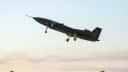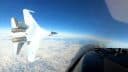
The AI agents performed advanced fighter maneuvers against simulated adversaries during 12 flights.
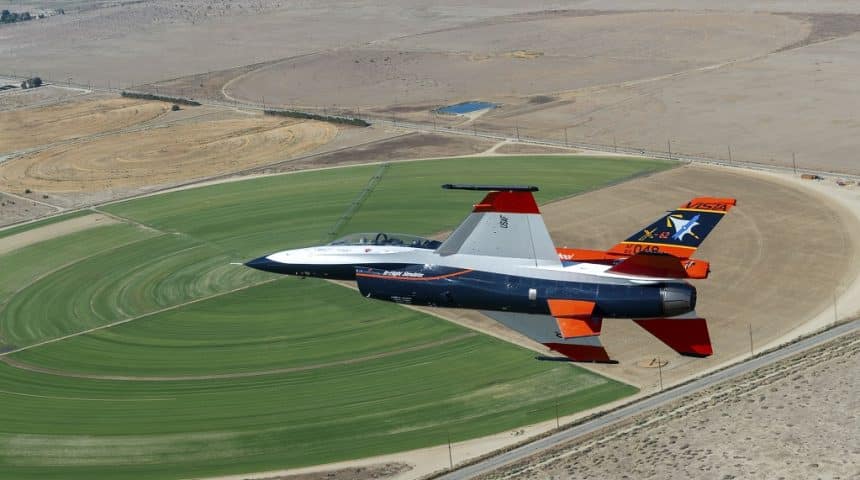
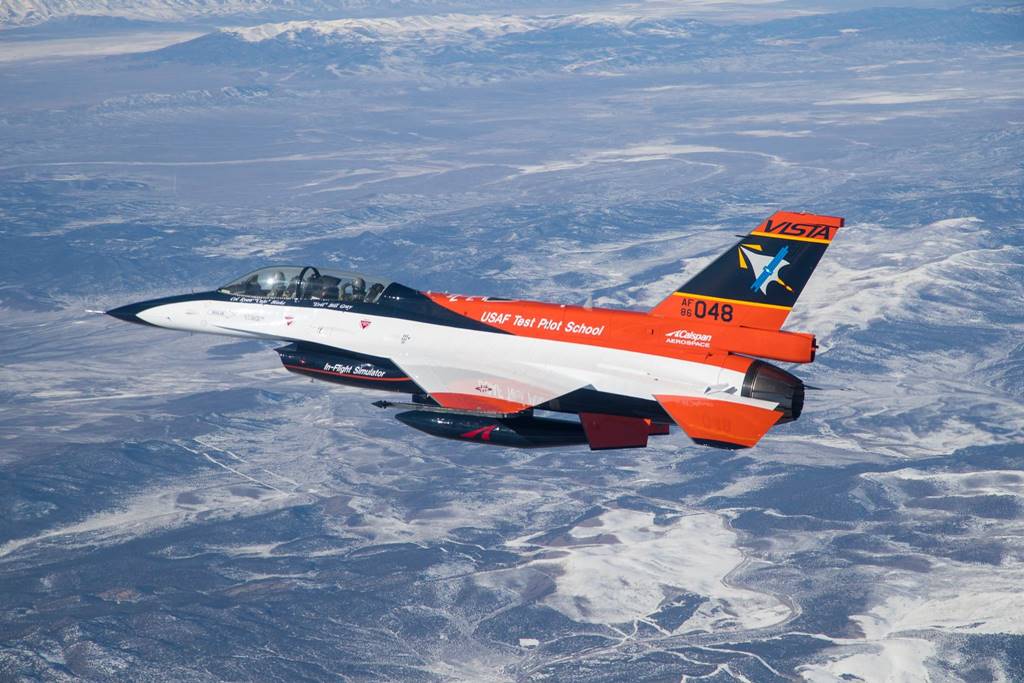
The U.S. Air Force just announced that Artificial Intelligence agents successfully piloted the X-62A Variable Stability In-Flight Simulator Test Aircraft during a total of 12 flights. While the news was published on February 13, 2023, the test happened between December 1 and 16, 2022, with the joint Department of Defense team launching the aircraft from Edwards Air Force Base, California.
The test campaign involved two AI agents, the Air Force Research Laboratory’s Autonomous Air Combat Operations and the Defense Advanced Research Projects Agency’s Air Combat Evolution, each performing in different roles. In fact, while the AACO’s AI agents performed one-on-one beyond-visual-range (BVR) engagements against a simulated adversary, the ACE’s AI agents performed within-visual-range maneuvering, also known as “dogfighting”, against constructive AI red-team agents.
Both teams’ AI agents executed autonomous tactical maneuvering while maintaining real-world airspace boundaries and optimizing aircraft performance, said the press release. In several instances, pilots completed the tests for ACE and AACO within hours of each other after engineers switched autonomy algorithms onboard the X-62A in minutes. It is worth noting that safety pilots were still present on board as backup in case of emergencies during the tests.
“The X-62A VISTA team has proven with this test campaign that they are capable of complex AI test missions that accelerate the development and testing of autonomy capabilities for the DOD,” said Dr. Malcolm Cotting, the director of Research for the U.S. Air Force Test Pilot School. “The X-62 is a flight test accelerator, it allows the USAF to rapidly execute tactical autonomy algorithm and fixed-wing vehicle model flight tests. These tests generate data that is used to improve the algorithms and vehicle models at a remarkably fast pace,”
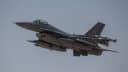
As we already reported in 2021, the X-62A is the new designation of the NF-16D VISTA (Variable In-flight Simulator Aircraft) operated by the U.S. Air Force Test Pilot School at Edwards Air Force Base. The NF-16 VISTA started life as a F-16D Block 30 which later received numerous upgrades and modifications, including the VISTA Simulation System (VSS) provided TPS students the ability to experience various flying conditions including simulation of other aircrafts’ characteristics.
In preparation for the X-62’s participation in Skyborg autonomous flight tests with the AFRL, the VSS is now complemented by a new system called the System for Autonomous Control of Simulation (SACS) to support autonomy testing. While this upgrade allows the X-62 to mimic the flight characteristics of unmanned aircraft like the MQ-20 Avenger, during the December test campaign the AI worked with the standard F-16 flight characteristics.
“After training our AI-driven autonomy agents using high performance computing and modeling and simulation, it is critical that we fly these agents to validate the difference from the simulator to live flights,” said an AACO official. “Having an aircraft like the X-62 is critical to rapid flight testing of these autonomous behaviors.”
The AACO team was able to fly, test and update agents based on flight data and then rapidly fly the new AI agents again within hours, without encountering airworthiness or safety issues. The goal of AACO is to develop and fly an advanced AI-driven autopilot capable of performing aviate and navigate functions and autonomous behaviors such as advanced intelligence, surveillance and reconnaissance and BVR combat.
DARPA’s ACE program aims to develop trusted, scalable, human-level, AI-driven autonomy for air combat by using human-machine collaborative dogfighting as its challenge problem. As we reported in 2020, the ACE program’s AlphaDogfight Trials pitted AI agents against each other flying simulated F-16s in a virtual dogfighting competition that culminated with the winning AI defeating an experienced F-16 fighter pilot flying in a simulator.
DARPA provided more details about the X-62 test campaign in a separate press release. DARPA performers EpiSci, PhysicsAI, Shield AI, and the Johns Hopkins Applied Physics Laboratory flew different F-16 AI algorithms on the X-62A. Heron AI, the winner of the AlphaDoghfight Trials, was not explicitly mentioned among the agents tested in December. Heron Systems was acquired by Shield AI in 2021 and is now operating as a wholly owned division under Shield AI to continue the development of advanced AI agents.
“We conducted multiple sorties [takeoffs and landings] with numerous test points performed on each sortie to test the algorithms under varying starting conditions, against various simulated adversaries, and with simulated weapons capabilities,” said Air Force Lt. Col. Ryan “Hal” Hefron, the DARPA program manager for ACE. “We didn’t run into any major issues but did encounter some differences compared to simulation-based results, which is to be expected when transitioning from virtual to live. This highlights the importance of not only flight testing advanced autonomous capabilities but doing so on testbeds like VISTA, which allowed us to rapidly learn lessons and iterate at a much faster rate than with other air vehicles.”
The Test Pilot School is also supporting the ACE program in measuring how well pilots trust the AI agent to conduct within-visual-range air combat while the human pilot focuses on larger battle management tasks in the cockpit. Air Force test pilots have flown numerous live flights in L-29 jet trainers, outfitted with sensors in the cockpit to measure pilot physiological responses, at the University of Iowa Technology Institute’s Operator Performance Laboratory (OPL).
“Thanks to the outstanding teamwork and coordination between DARPA, the Air Force Test Pilot School, the Air Force Research Laboratory, and our performer teams, we’ve made rapid progress in Phase 2 across all areas of the ACE program,” said Lt. Col. Hefron. “VISTA allowed us to streamline the program by skipping the planned subscale phase and proceeding directly to a full-scale implementation, saving a year or more and providing performance feedback under real flight conditions.”
Breaking Defense’s Valerie Insinna was able to obtain some more details about the AI test campaign with the X-62. During a typical test flight, the X-62 was flown to the right altitude and speed by the pilots and the simulation system was loaded before engaging the simulation. Then the crew loaded specific autonomy solutions into SACS via a tablet.
The autonomy tests were set up so different patterns could be flown during a sortie, with the AI agent able to respond to virtual enemies and wingmen controlled by a computer. The end goal would be to autonomously fly the X-62 in a demonstration with human pilots in real fighter jets, acting either as adversary forces or wingmen, but a timeline is not yet clear.