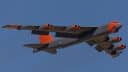
The technologies saved hours of time and effort, improved safety, and simplified several tedious tasks in maintaining the B-52.
The U.S. Air Force is experimenting with new ways to improve maintenance and repair practices on the B-52 Stratofortress bomber by using drones, advanced scanning, augmented reality, and data processing algorithms that reduce the time and effort expended in upkeeping the 70-year-old airframe.
Under the aegis of the Global Strike Command and the AMC (Air Mobility Command) at Barksdale AFB Louisiana hosted representatives from Boeing, SEMPRE, Northrop Grumman, Skydio, and Near Earth Autonomy which demonstrated multiple technologies on Jul. 16, 2024. These included “unmanned aerial systems (UAS), AI software, stand-alone networks, and augmented reality devices.”
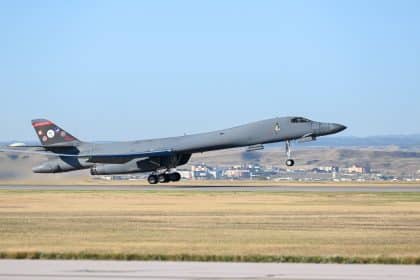
Produced in the 1950s, the aircraft is the mainstay American strategic bomber, expected to stay in service for the next few decades through an impending upgrade to the B-52J variant with new Rolls Royce engines, a slight airframe redesign and a series of new electronics and avionics to survive a contested battlespace with peer adversaries.
Local Network for Maintenance Data Sharing
Demonstrations largely “revolved around improving physical scans of the aircraft,” which is “a time-consuming and potentially dangerous process for maintainers.” According to Master Sgt. Brett Jordan, the superintendent of the 307th Aircraft Maintenance Squadron, the physical scans are conducted every 180 days and again every 450 flight hours.” “But there are areas that are difficult and time-consuming to inspect due to access,” Jordan said.
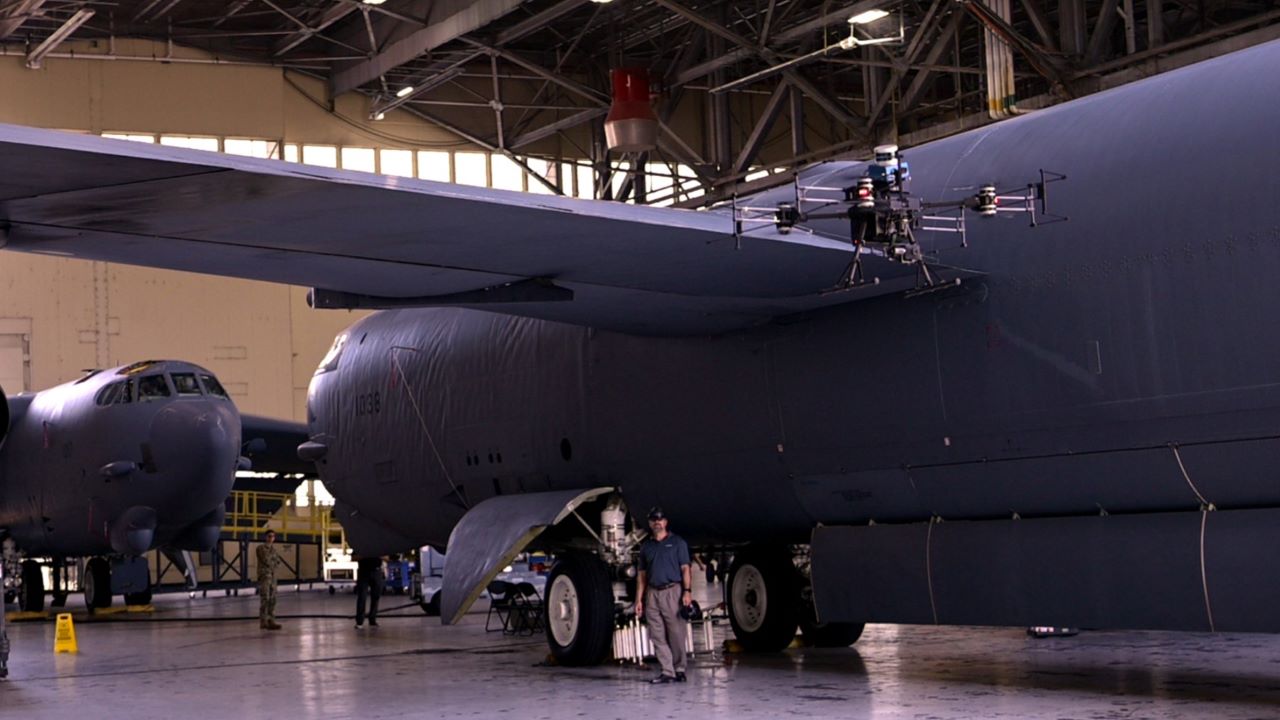
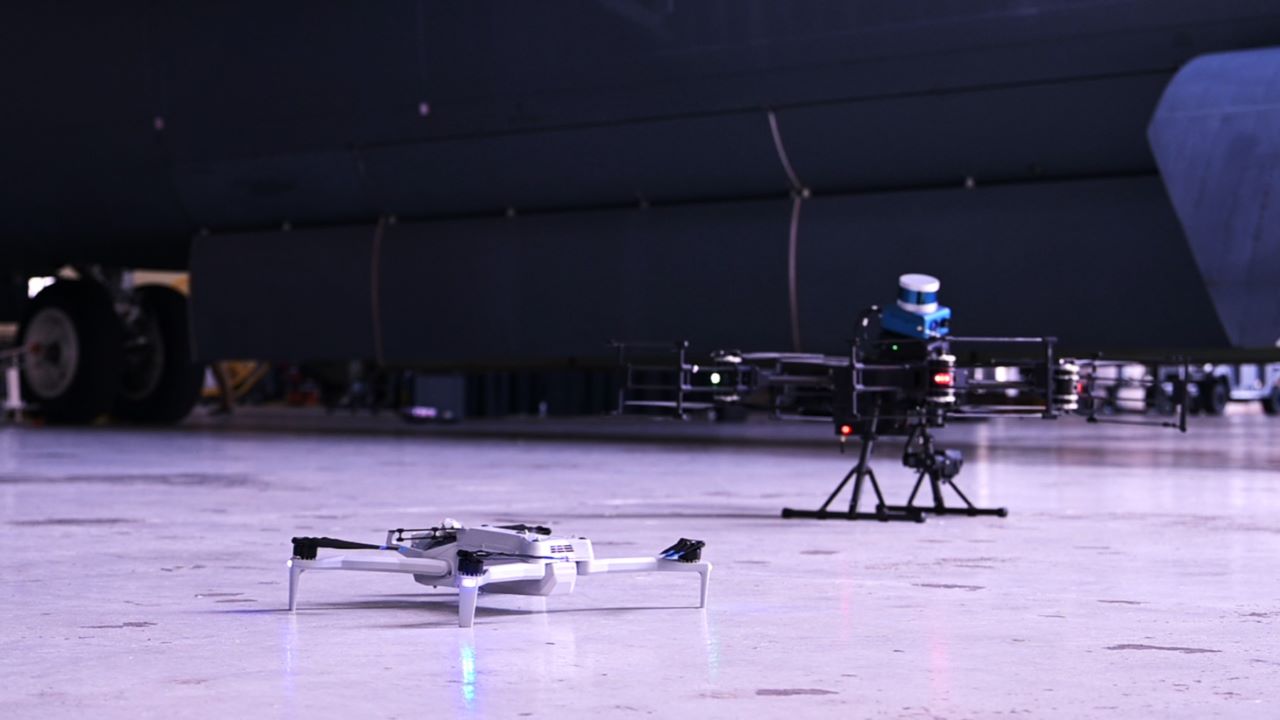
Near Earth Autonomy scanned the surface of two Air Force Reserve Command B-52s with an in-house 15 kg drone, which “sent information via a secure network to Boeing’s artificial intelligence enabled software.” The software then provided instant feedback on problem areas on the jet’s surface.
Meanwhile SEMPRE provided the network, generated from a “self-contained unit” called the SEMPRE T. The portable unit is hardened against electromagnetic pulses and combines a 5G cellular network, decentralized hybrid cloud, and satellite gateway in remote and contested environments.
“Things that would normally knock a network off the air won’t affect the SEMPRE T,” said Jon Huppenthal, SEMPRE chief technology officer. “It can be unpacked from a plane and be fully operational from a remote location with no connectivity in approximately 15-20 minutes.”
But Barksdale maintainers beat Huppenthal’s estimates, getting the SEMPRE T operational in 10 minutes, providing Boeing, Near Earth Autonomy, and Northrop Grumman with a secure network augmented by “anti-tamper sensors, a zero-trust architecture, and end-to-end encryption.”
[In IT Security, a Zero Trust Architecture is a security framework that assumes no implicit trust for any user, device, or system, regardless of whether it is inside or outside the network perimeter. It requires continuous verification of every user and device attempting to access resources, even after initial successful authentication, emphasizing the principle of “never trust, always verify.” The framework was introduced several years ago, but it has emerged as a standard practice in cybersecurity in the last couple of years. NdR]
Drone Scanning
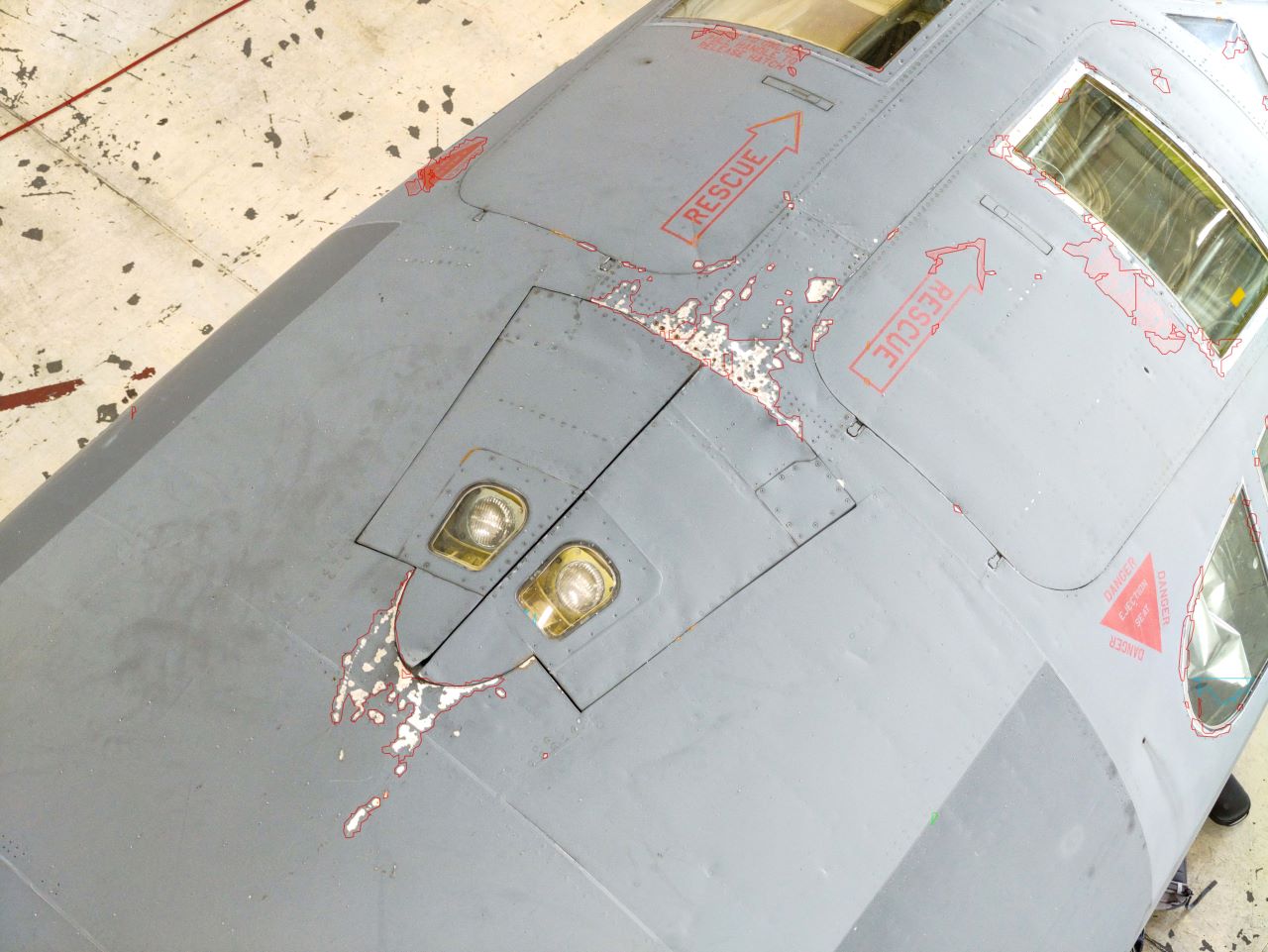
Using the SEMPRE T network, the Near Earth Autonomy’s drone used a pre-programmed flight pattern to scan the B-52’s surface in a few minutes, a task that would ordinarily take several maintainers hours to complete. Hundreds of photos from the drone were sent in real-time to Boeing’s ADDS (Automated Damage Detection Software), who’s “advanced AI algorithm” sifted through the data and quickly detected “anomalies in the jet’s skin, including corrosion, missing seals, and paint delamination.”
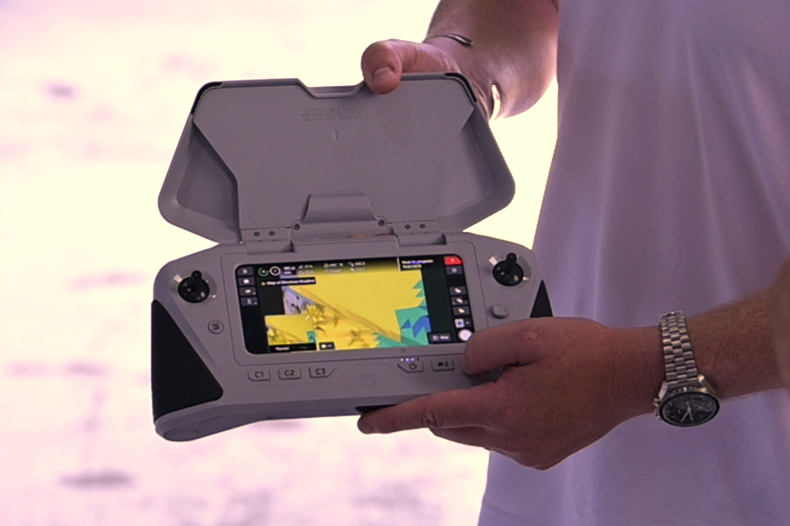
“ADDS pinpoints anomalies so that when maintainers have to harness up and put themselves in danger by going 40 feet up to work on a tail, they know exactly where to go and how to fix it,” said Scott Belanger, a retired Air Force maintenance officer who now works on Boeing’s Contested Logistics Solutions Team. NEA and Boeing have employed ADDS on C-17 Globemasters at Joint-Base Pearl Harbor-Hickam as part of a three-pillared inspection program for the past three years.
Home station checks on a C-17 that used to take eight to nine hours, not including harnessing up and bringing in lifts, have been reduced to three hours with enhanced safety, Belanger added. The technology is also more efficient in citing technical anomalies in aircraft with an increased rate of 94%, compared to humans which stands at 50%. But Belanger maintained the technology “doesn’t replace maintainers; it just elevates their ability to find problem areas and remedy them.”
Skydio too provided aircraft scanning but in a “smaller, more deployable UAS that can be used in garrison as well as remote and contested environments.” This is the X10D drone, which weighs under 2 kg and can be folded into a package 13 inches long and hand-carried in a small case. Peyton Knippel, Skydio’s Director of Business said it can be used by even an operator who has no previous drone experience. It records aircraft photos on a micro-SD card, which can be directly transferred to ADDS after a flight without a network.
Augmented Reality
AR (Augmented Reality) also played a “significant role” in the demonstration. Northrop Grumman combined AR in a wholly encrypted environment to ensure maintenance accuracy, demonstrating how maintainers in remote environments could use AR-enabled glasses to collaborate with subject matter experts in other parts of the world through the SEMPRE T to address maintenance problems on the B-52.
Michael Hinkley, Northrop Grumman’s Sector Manager for Advanced Manufacturing, said the AR system allows maintainers to reach across the world to get real-time help without fear of unfriendly forces finding out a B-52 is currently inoperable and using that information against them. “The system has three levels of encryption and can be palletized and deployed,” he said. “It can potentially reduce labor by 10 to 60 percent.”
Northrop Grumman augmented security levels during the demo by running their data through the SEMPRE T at Barksdale and another in San Diego.
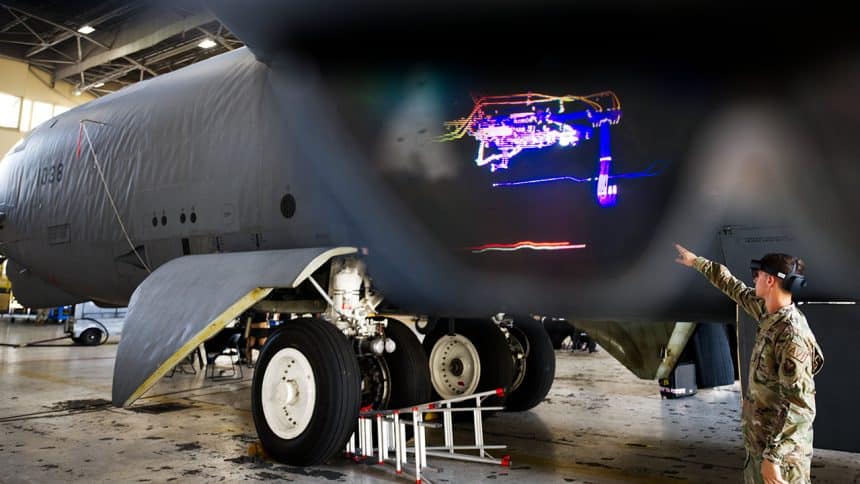
Boeing also provided a separate AR platform that generated holograms of the complex wiring systems beneath the skin of the B-52. The holograms are designed to allow maintenance personnel to locate wiring quickly for use in training and practical applications.