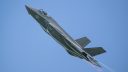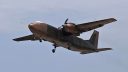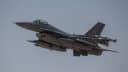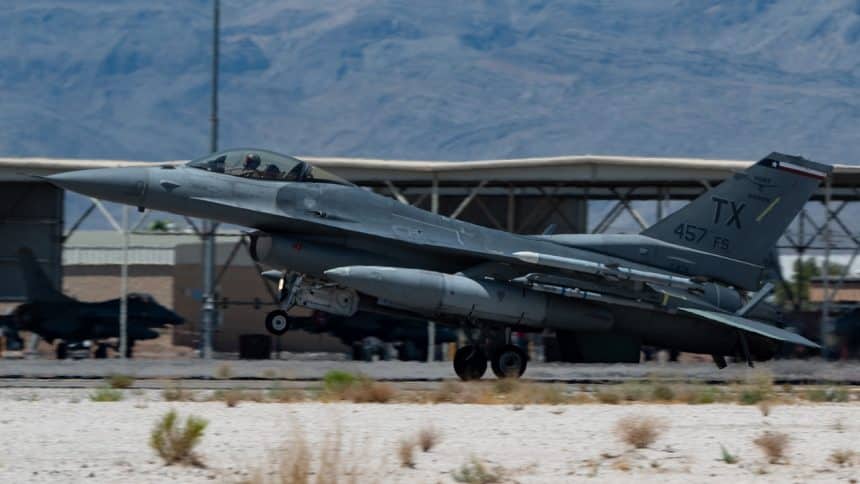
During the most recent iteration of Exercise Bamboo Eagle, the Nellis Aggressors squadrons played a crucial role in providing an exceptionally realistic training environment for participating aircrews.
On Aug. 10, 2024, the U.S. Air Force Warfare Center concluded Bamboo Eagle 24-3, a joint exercise which is part of the Air Force’s reoptimization for Great Power Competition. The exercise, which took place across several locations in California and in airspace over the eastern Pacific Ocean, was designed to test the capabilities of the Air Force to better prepare for the challenges that it could meet in a future conflict with peer adversaries.
Bamboo Eagle specifically focused on distributed command and control, disaggregated mission generation and the joint maritime environment, said the service. The exercise kicked off at Nellis Air Force Base, Nevada, on Aug. 2, before moving to various locations.
“As an Air Force, we are learning that we are all going to be on the front lines,” said Maj. Gen. Christopher Niemi, U.S. Air Force Warfare Center Commander. “The USAF no longer has the luxury of projecting power from sanctuary bases. Airmen will be required to sustain the same operational tempo as before, but under the threat of large-scale enemy fires at a magnitude this nation has never seen”.
Bamboo Eagle 24-3 exercise this evening, the airspace reservation extends over 600 Nautical Miles from land over the Pacific Ocean and up to 80,000ft 😎 pic.twitter.com/ldR544qO9K
— Thenewarea51 (@thenewarea51) August 7, 2024
Bamboo Eagle 24-3: a comprehensive overview of strategic Air Force training
The exercise has two key differences from the more famous Red Flag, with the first one being the involvement of all specialties that cooperate together to accomplish the mission.
This was better explained by Niemi: “Unlike Red Flag, which only exposes operators to enemy tactics, techniques, and procedures, Bamboo Eagle exposes the entire blue kill chain to enemy threats, from the logistics airman loading pallets on a C-130 to the F-22 pilot engaging the enemy.”
The second difference was the high degree of adaptability requested by all the parties involved, as it would happen in the real scenarios.
“Red Flag is scripted. The schedule is set. The different units get to talk face-to-face and mission plan together. Bamboo Eagle is not. There is no script,” said Lt. Col. Ian Osterreicher, 34th Fighter Squadron commander. “It’s important because that is what will happen (in conflict). You’ll go somewhere you’ve never been before, with people you’ve never worked with, and be asked to do something you’ve never done before.”
Day four
6x KC-135
5x KC-46
1x E-3
1X E-11
1x HC-130J
UC-35 seems to just be in the area? https://t.co/nsUGnf5pRm pic.twitter.com/UPBjTLUvmL
— 𝙎𝙍_𝙋𝙡𝙖𝙣𝙚𝙨𝙥𝙤𝙩𝙩𝙚𝙧 (@SR_Planespotter) August 8, 2024
The reason behind this is the current security environment we live in, and the different challenges posed to today’s armed forces in a dynamic, multidomain battlespace.
“Today’s security environment requires us to be an agile, adaptable force capable of maintaining lethality in the face of a challenging and dynamic battlespace– Bamboo Eagle reflects that fact. The exercise challenges our team to operate in a contested, dynamic environment against high-end threats on short notice,” said U.S. Air Force Chief of Staff Gen. David Allvin. “Training in a combat-representative environment like this helps our Airmen and the Joint Force develop the right operational concepts, capabilities, and plans to bolster deterrence and maintain our competitive advantage against any potential adversary.”
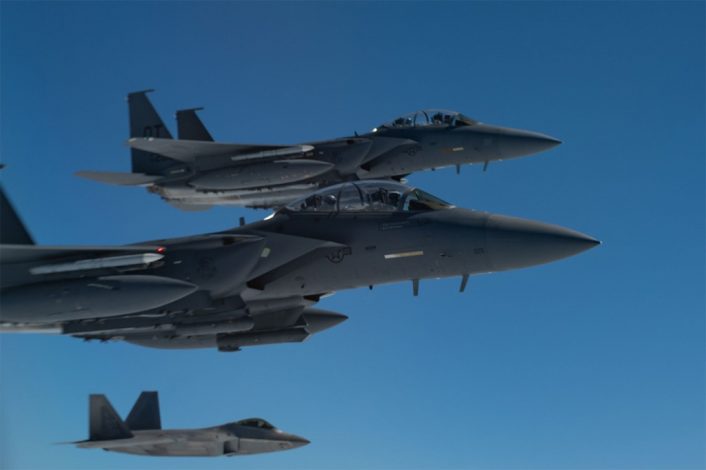
The Aggressors: a crucial component for a realistic training
Compared to other exercises where deployed units take part in both Blue Air and Red Air missions, an exercise with the complexity level of Bamboo Eagle requires specialized units. These units are specifically prepared to provide realistic, threat-representative, near-peer adversaries for high-end U.S. and coalition training.
During the most recent iteration of Exercise Bamboo Eagle, the Nellis Aggressors squadrons played a crucial role in providing an exceptionally realistic training environment for participating aircrews. This large-scale exercise brought together multiple Aggressor units, each tasked with simulating the most challenging and integrated threats across various domains of warfare.
The Red Force for Bamboo Eagle 24-3 was comprised of the 57th Information Aggressor Squadron, 507th Defense Aggressor Squadron, 64th, 65th, and 706th Aggressor Squadrons. These units were responsible for creating a training scenario that closely mimicked potential adversaries, offering Blue Forces an invaluable opportunity to hone their skills against near-peer threats.
706th Aggressor Squadron F-16 departing Nellis AFB on a Bamboo Eagle 24-3 mission off the Coast of California 😎
🎥 Staff Sgt. Jose Miguel Tamondong pic.twitter.com/roh6BhomVK
— Thenewarea51 (@thenewarea51) August 7, 2024
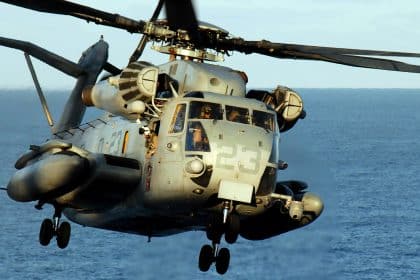
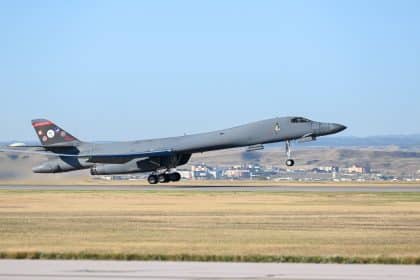
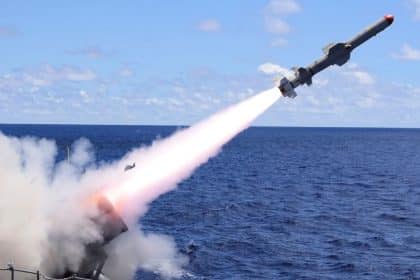
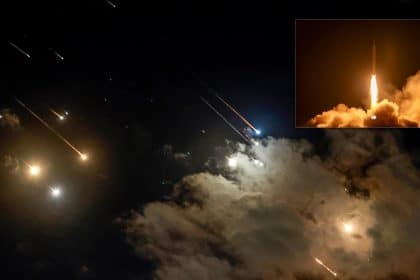
As Lt. Col. Brandon Nauta, commander of the 65th Aggressor Squadron, noted, this iteration of Bamboo Eagle required the Red Force to embody a dedicated “Aggressor Nation Team,” engaging Blue Forces in both live fly and virtual scenarios. The complexity and integration of these adversaries were among the most advanced the participating aircrews had ever faced.
The 64th Aggressor Squadron commander added that the exercise offered Blue Forces the unprecedented chance to train against a realistic threat that was not only simulating enemy tactics but also actively designing scenarios to exploit their weaknesses. This level of realism and strategic depth in the exercise scenario is something that had never been done before, providing a unique and challenging environment that pushed the capabilities of the Blue Forces to the limit.
Exercise Bamboo Eagle 24-3 thus represents a significant evolution in military training, where the Aggressor squadrons at Nellis Air Force Base were able to create a dynamic and demanding adversary, ensuring that participating aircrews were better prepared for the complexities of modern air combat.
“Bamboo Eagle 24-3 represents the most realistic live fly and virtual operational and tactical level training that a combat Airman, Guardian, Sailor, or Marine will face in training,” said Nauta. “So the saying goes, ‘As iron sharpens iron’, the Bamboo Eagle 24-3 participants will come out of this exercise ready to face any challenge.”
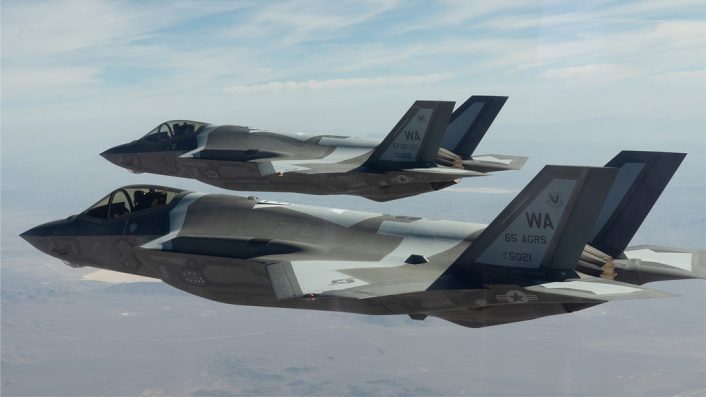
Mastering the enemy: the evolving role of Red Forces in U.S. air combat training
The Red Forces role can be considered one of the most demanding in the Air Force activity. A Red Force squadron needs to train and act as an OPFOR (Opposing Forces) in military exercises.
The goal is to “simulate” enemy assets by employing “blue systems” and following the “red tactics”. The role is not only limited to the usage of the air assets but it can involve surface-based threats and even the cyber domain.
To pursue and maintain a valid unit of “bad guys” you need to constantly monitor and update enemies’ tactics and techniques, starting from the study of the cutting-edge systems and the related weapons, with a deep knowledge of the weapons’ employed envelope.
This kind of job needs a continuous support of the involved intelligence cells in order to collect the latest “news” about the enemies. Actually the U.S. Air Force is operating the F-16C and F-35A to match the opponents’ capabilities, included this way the 5th generation stealth profiles for the latest generation enemy aircraft.
Also, the pilots of these specialized units need to have a specific training to not only replicate the adversary, but also to put the Blue Air to the test, be good at identifying their errors and exploit them in a way that let pilots learn from them.
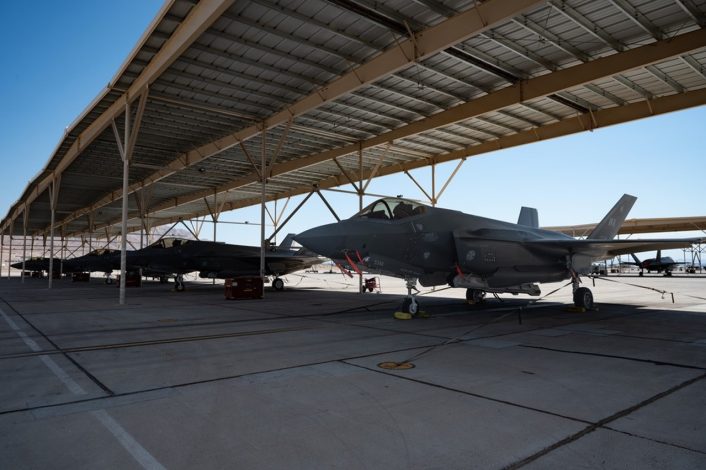 Four U.S. Air Force F-35A Lighting II sit on the flightline during Bamboo Eagle 24-3 at Nellis Air Force Base, Nevada (Image Credit: U.S. Air Force)
Modernizing military training: the contributions of private companies to adversary simulation
In recent years, the privatization of military training has seen a significant growth, with private companies increasingly stepping into a secondar role traditionally held by many squadrons.
These companies specialize in providing “Red Air” adversary services, where they simulate enemy aircraft and tactics for the training of military pilots.
This has become an integral part of both daily training routines and major exercises, enhancing the preparedness of aircrews for real-world combat scenarios. The available fleets of these companies can range from older models like the Mig-21s, A-4s and F-5s to more modern fighter like the F-16s. This variety allows them to offer a broad spectrum of training opportunities.
The use of contractors for “Red Air” services also allows military forces to focus their resources on other critical areas while still maintaining a high level of training. These companies often employ experienced former military pilots who bring a wealth of knowledge and expertise to the training environment. As a result, they can replicate enemy tactics with a high degree of realism, making the training scenarios as authentic and challenging as possible.
Contracted “Red Air” services were also part of Bamboo Eagle 24-3, with the upgraded F-5s of Tactical Air Support reportedly involved in the exercise.
Meet the ‘VILLAIN’s 👺
•
•
📍- Santa Maria Airport | F-5E (Former RJAF) | #Northrop #BambooEagle #Aviation pic.twitter.com/xJWGYYNGqq
— Jaeden Branom (@BranomJaeden) August 7, 2024