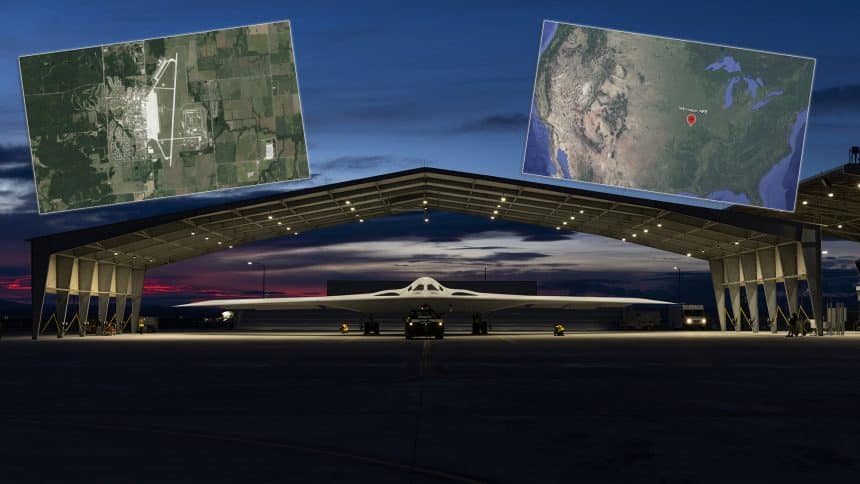
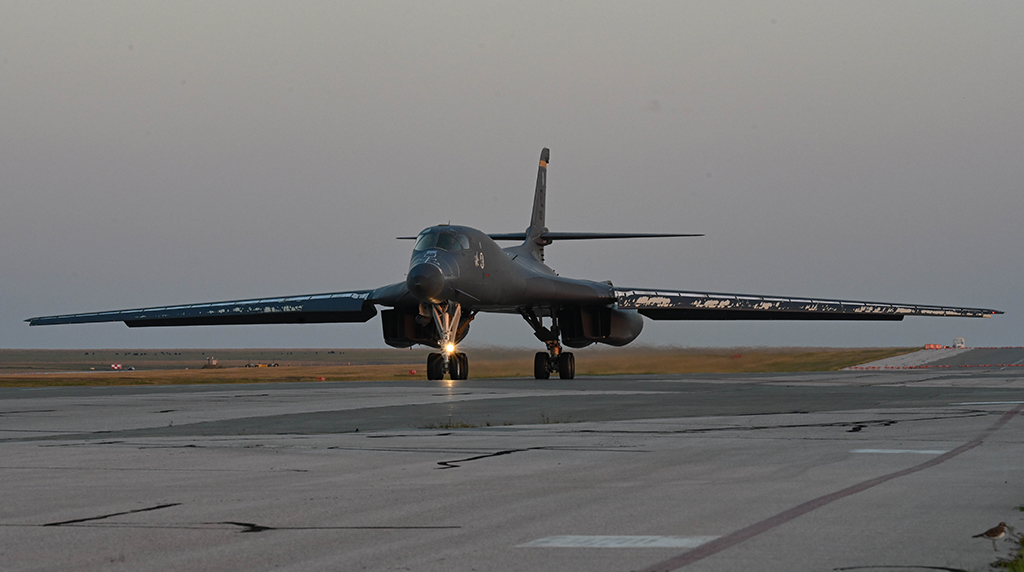
Whiteman Air Force Base is currently home to the B-2 Spirit, while Dyess Air Force Base hosts the B-1B Lancer. Both bases are slated to host the B-21 in the future.
Secretary of the Air Force Frank Kendall has designated Whiteman AFB, Missouri, and Dyess AFB, Texas, as the second and third bases respectively, for the B-21 Raider, the Air Force’s newest strategic stealth bomber. Ellsworth AFB, South Dakota, was previously selected as the first base to receive the B-21.
AFGSC quoted General Thomas Busseire in a statement: “We continue to achieve B-21 production milestones; through digital engineering and open architecture design, we are getting an agile strategic deterrent that delivers a decisive response as required.” It described the B-21 Raider as representing “a generational leap as a dual nuclear and conventionally capable, stealth, penetrating, long-range strike platform.”
The AFGSC is continuing to “maintain and modernize” the B-2 Spirit and the B-1 Lancer bombers for retaining “strike options” until the B-21 is delivered in the “mid-2020s.” The Air Force will purchase at least 100 B-21s, with the type currently in low-rate initial production and executing flight tests.
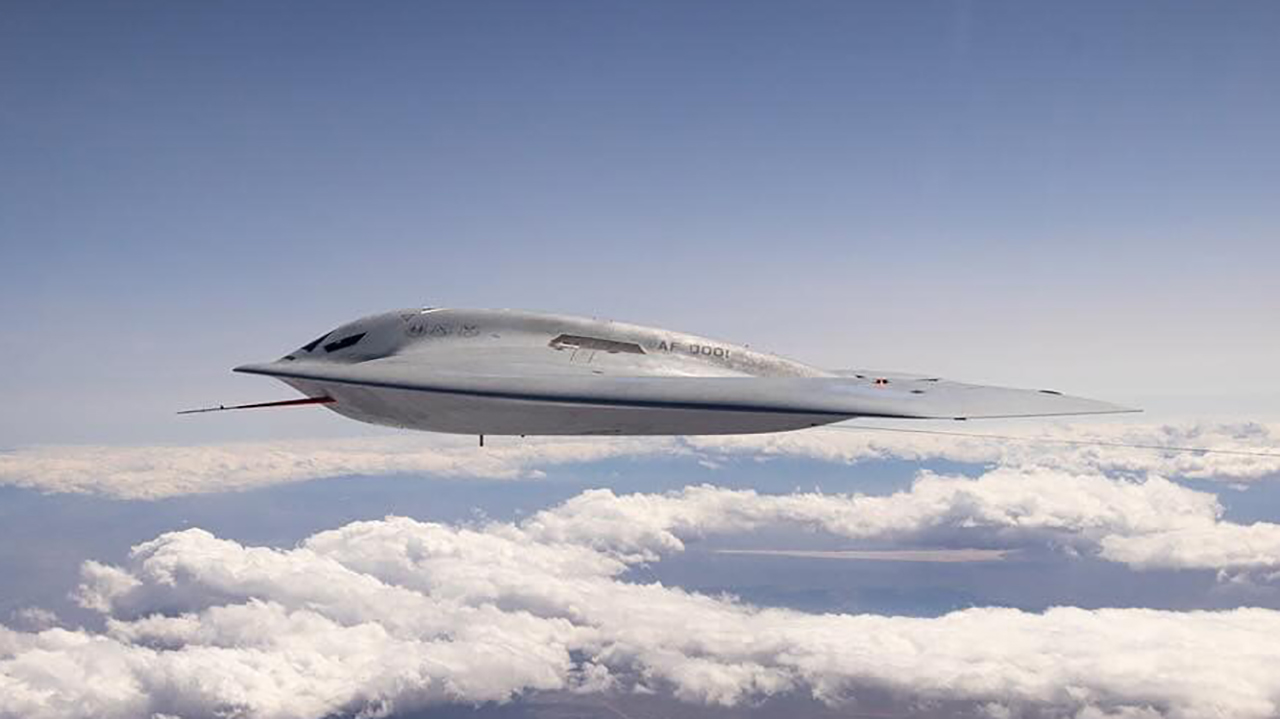
As The Aviationist had reported, the price for the subsequent production Lots is likely to go up after Northrop Grumman and the U.S. government negotiated a “not-to-exceed” pricing for additional 19 aircraft.
A B-2 Spirit nicknamed the “Spirit of Pennsylvania” (serial number 93-1087) flew to from Palmdale to Edwards AFB, California on Jul. 17, 2024, for a new round of upgrades and testing called Spirit Realm 1. This is to integrate open mission systems architecture, new software, sensors and weapons, to enhance its survivability and combat capability. The journey to the facility came at the exact same date thirty-five years ago, the first B-2 took from Palmdale.
‘Whiteman AFB capable of operating the B-21 Raider’
Whiteman said its selection as the second B-21 base was made following a “thorough evaluation process, which included operational analysis, site surveys, and consideration of environmental, economic, and technical factors.” Whiteman AFB’s “experience with the B-2 Spirit stealth bomber and its strategic location” informed “the decision to base the B-21 here.” A “significant improvement” from the “current bomber force,” the B-21 is capable of “penetrating contested air spaces at long range and deploying either conventional or nuclear munitions.”
Hello Raider! The B-21, the world’s second stealth bomber, made its maiden flight today at #Northrop‘s facility at the Air Force’s Plant 42 in Palmdale, California (November 10, 2023). #avgeeks #aviation #aviationdaily #aviationlovers #news #B21 #USAF pic.twitter.com/Lj0dl5k4Vd
— Air Power (@RealAirPower1) November 10, 2023
Whiteman’s 509th Bomb Wing boasts “long and storied history” since its establishment in the concluding days of World War II. It was designated as the 509th Composite Group at the time. The unit has been serving a key component of the Air Force’s bomber fleet.
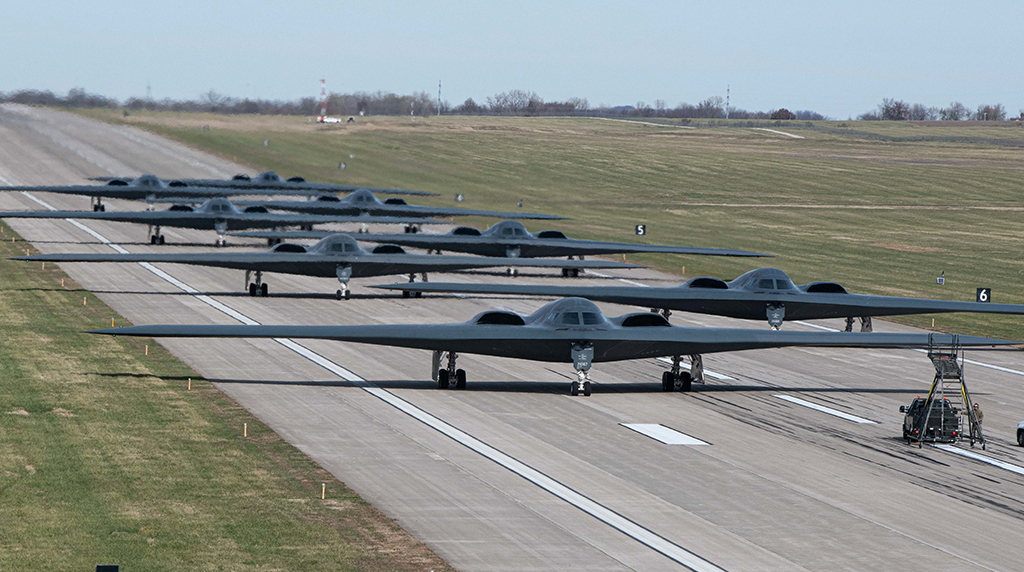
Whiteman AFB is also tactically located in the heart of the United States, providing easy access to both coasts and the country’s central regions. This location as a B-21 base allows for “quick response times and the ability to reach targets across the globe.” Moreover, Whiteman AFB already has the requisite infrastructure and systems to support the B-21, including a skilled workforce and modern facilities, which assures a “smoother” and “efficient” transition to the B-21.
The bases and the bombers
According to Air and Space Forces Magazine, Ellsworth AFB, currently a B-1B Lancer base, designated the first B-21 base after clearing an EIA (Environmental Impact Assessment) report in 2021, is also intended to be its FTU (Formal Training Unit). Prior to that, in 2019, Ellsworth, Whiteman and Dyess AFBs were announced as the “preferred” beddown locations.
The Air Force is still to give “timelines for when the bases will convert from their current aircraft to the B-21,” ASFM added.
Of the 21 B-2 Spirits, Whiteman AFB hosts 19 aircraft, as two were lost in crashes and about 14 are available for operations at any given point in time. B-2s from Whiteman 509th BW are presently at the RAAF’s (Royal Australian Air Force) base in Amberley for their first BTF (Bomber Task Force) deployment to Australia since 2022.
RAAF E-7A Wedgetail, two EA-18G Growler jets and two F-35A Lightning II jets fly in formation with two United States Air Force B-2 Bombers and two F-22 Raptor fighter jets.
RAAF photo by FSGT Christopher Dickson pic.twitter.com/kJcfWonr6g
— Fighterman_FFRC (@Fighterman_FFRC) August 23, 2024

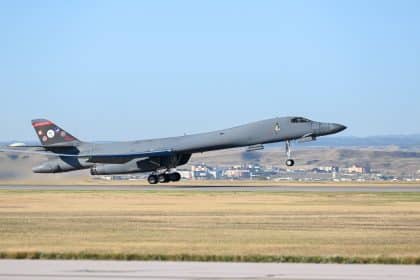

Although the divestment of the B-1 began in 2021, both the Lancer and the B-2 will be retired only once the B-21 is available in sufficient numbers. Meanwhile, the B-52 Stratofortress will remain in service as a primary conventional and nuclear strike platform.
The B-52 on its part is in fact receiving a series of upgrades to its engines, radar, and avionics that are expected to extend its service life into the 2050s as a part of the B-52J standard. The 76 B-52s are based at Barksdale and Minot AFBs in Louisiana and North Dakota.
The USAF just released images of the B-1B Lancer heavy bombers that conducted a nonstop CONUS to CONUS strike mission targeting Iranian-backed groups in Iraq and Syria last night.
Both took off from Dyess Air Force Base in Texas and landed back in the US after the strike. pic.twitter.com/pHvL9Lktf7
— OSINTtechnical (@Osinttechnical) February 3, 2024
Environmental Impact Assessment
The USAF’s EIA statement quoted by ASFM released in May said that Whiteman AFB would see some minor effects of switching from the B-2 to the B-21 Raider. “There would be an increase of 1,021 individuals at Whiteman AFB from 19,408 to 20,429 after all B-21 mission individuals have arrived and all B-2 mission individuals have departed.”
“The number of airfield operations flown per year would increase by 1,980, from 29,771…to 31,751,” by the time all the new aircraft arrived. There would consequently be a need for increased base housing.
“Airfield operations at Whiteman AFB would increase by 6.65 percent from baseline levels. This minor level of increase would not likely impact airspace use, or scheduling, therefore no significant impacts are anticipated.” Whiteman will need “construction of 16 new facilities or facility additions (600,000 square feet), renovation or repair of 26 facilities (1.7 million square feet), and demolition of three facilities (85,000 square feet) … to support the [Main Operating Base 2] mission at Whiteman.”
Thirty-seven percent of on and nearby off-base residents would be exposed to a higher noise – primarily from increased aircraft. But the highest individual noises would not be greater than the present levels.